DIY Raised Garden Beds with Corrugated Metal: A Complete Guide
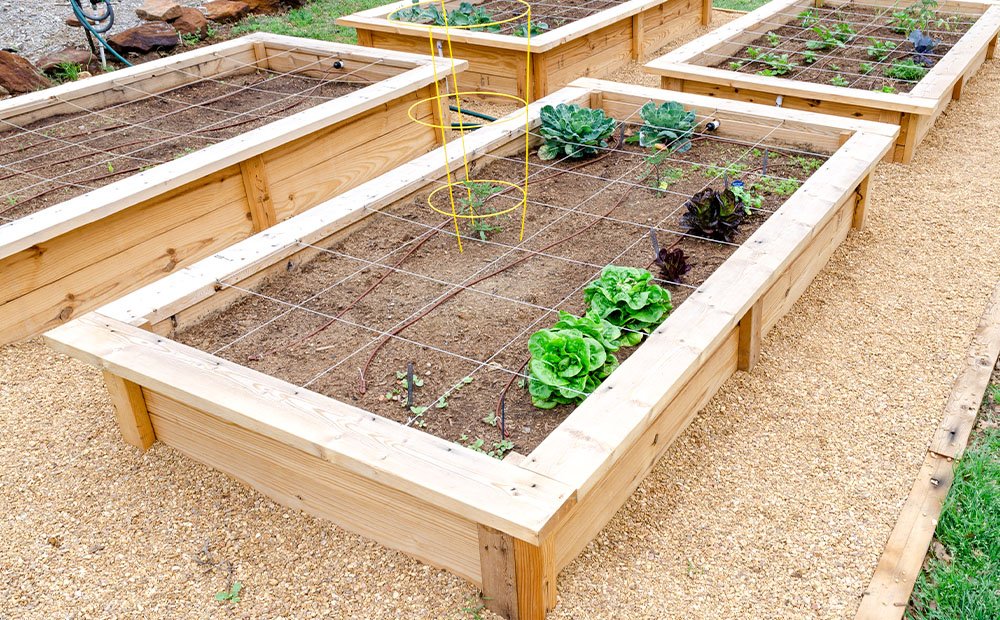
Have you been admiring the elegant look of raised garden beds? Now’s the perfect opportunity to construct your own. These functional garden features not only enhance your yard’s appearance but also make gardening more accessible and productive.
Benefits of Switching to Raised Garden Beds
The advantages of raised garden beds extend far beyond aesthetics:
- Ergonomic Gardening: Significantly reduces strain on your back and knees while tending to plants
- Soil Quality Control: Fill with premium soil for higher yields in compact spaces
- Weed Management: Effectively blocks invasive weeds and windblown seeds
- Pest Deterrence: Elevated height naturally discourages rabbits and other ground pests
For gardeners seeking low-maintenance landscaping alternatives, consider exploring gravel gardens. Once established, they require minimal weeding and watering compared to traditional lawns and garden beds.
Materials Shopping Guide
You can find everything needed at your local home center for approximately $200 per planter. For our project, we selected cedar-toned pressure-treated lumber for a natural look without the cost of actual cedar.
Pro Tip: Take time selecting straight, quality lumber pieces. When you bring them home, cover with plastic to prevent premature drying. Pressure-treated wood tends to warp as it dries, so it’s better to let it dry after assembly when all components are securely fastened together.
For the metal elements, home centers typically stock light-gauge corrugated metal (we used 30 gauge), which works perfectly when reinforced with plywood. Remember: with metal gauges, higher numbers indicate thinner material. Ensure all screws are rated for treated lumber applications.
Materials Required
- (2) 26″ x 10′ corrugated metal panels
- (5) 2×6 x 10′ treated lumber
- (4) 2×4 x 8′ treated lumber
- (2) 2×2 x 8′ treated lumber
- (1) 3/4″ x 4′ x 8′ treated plywood
- 6-mil plastic sheeting
- 2″ deck screws
- 2-1/2″ deck screws
- 2-3/4″ deck screws
- 1/4″ x 6″ coated construction screws
- 1″ sheet metal screws with washers
- 1/4″ stainless steel staples
Tools Needed
- Circular saw or miter saw
- Drill/driver
- Level
- Metal shears
- Stapler
Construction Process in Detail
Before beginning construction, carefully review the cutting list and gather all materials. For your reference, the main components include:
- Parts A, B, C: Rails and stiles for end frames
- Parts D, E, F, G, H: Components for side frames
- Parts J, K: Cleats for interior corners
- Parts L, M: Rim pieces
Step 1: Build the End Frames
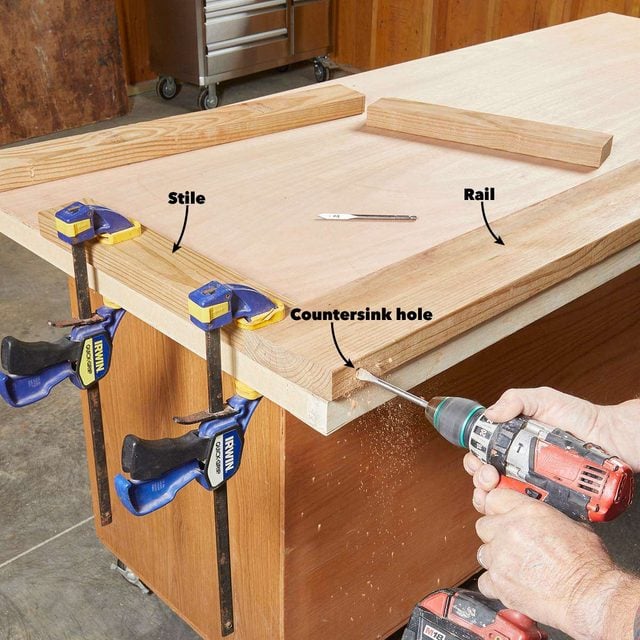
- Prepare your workspace: Find a flat, level surface large enough to lay out the frame components. Use sawhorses or a workbench if available.
- Arrange the components: Position the top rail (A), bottom rail (C), and stiles (B) with their best-looking sides facing up. Note that on the end frames, the stiles fit between the rails.
- Pre-drill for better results: To prevent splitting, pre-drill holes for all screws. For the bottom rails (C), use a 5/8-inch spade bit to create 2-inch deep countersink holes that will accommodate the heads of the 6-inch construction screws later.
- Secure the components: Clamp the parts firmly to maintain alignment. Connect the stiles to the top rail using 2½-inch deck screws (two screws per joint). For the bottom rail connections, use 2¾-inch deck screws.
- Check for square: Measure diagonally from corner to corner in both directions. Equal measurements indicate a square frame. Adjust as needed before screws fully tighten.
- Repeat for second end frame: Follow the same process to create the opposite end frame, ensuring both are identical in dimensions.
Step 2: Construct the Side Frames
- Arrange the side frame components: Position the top rail (D), middle rail (F), bottom rail (G), and stiles (E) according to the plan. Note that unlike the end frames, on the side frames the rails fit between the stiles.
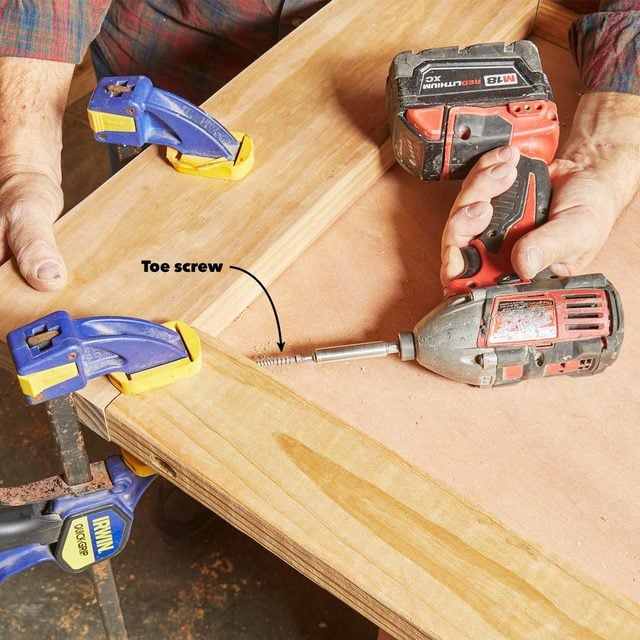
- Implement toe-screw technique: For the side frames, use “toe screws” – screws driven at an angle – to connect the pieces. This method provides strong joints while keeping the exterior surfaces clean.
- Pre-drill angled holes: Create pilot holes at approximately 45-degree angles where rails will connect to stiles. For best results, drill the hole about ¾-inch from the end of the rail.
- Drive the toe screws: Use 2½-inch deck screws to secure the rails to the stiles. Drive two toe screws at each connection point, approaching from opposite angles for maximum strength.
- Prepare countersinks as needed: If any screw heads don’t sink completely into the wood, use a drill bit sized to match the screw head diameter to create shallow countersink holes. This ensures a smooth surface.
- Add horizontal supports: Attach the horizontal supports (H) to the inside of the frame using 2-inch deck screws. Position these supports to correspond with the height of the corrugated metal panels.
- Repeat for second side frame: Follow identical steps to create the matching side frame.
Step 3: Assemble the Main Box
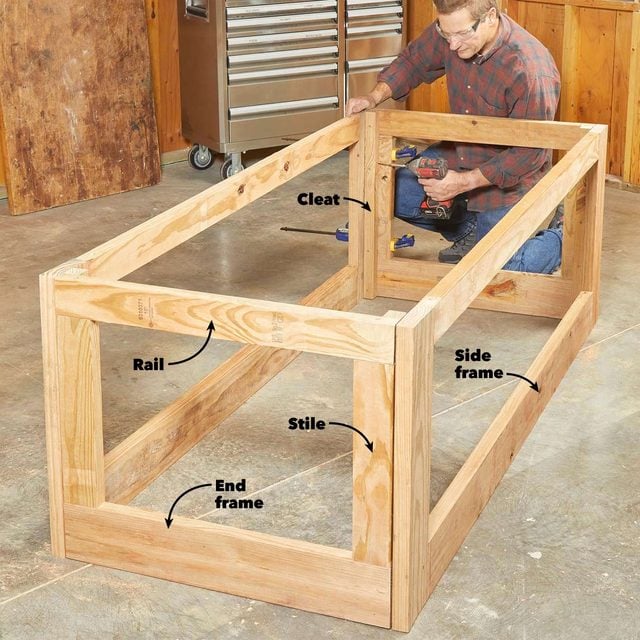
- Position the frames: Arrange the four completed frames to form a rectangular box. Place the frames on their edges with the “show sides” (most attractive sides) facing outward.
- Install corner cleats: Position the vertical cleats (J) and horizontal cleats (K) at each inside corner. These cleats create connecting points between the end and side frames.
- Pre-drill through cleats: To prevent splitting, pre-drill holes through the cleats before driving screws.
- Secure the frames: Drive 2-inch deck screws through the cleats into the frames. Use three screws per cleat for optimal strength. Work systematically around the box, checking for square as you go.
- Verify dimensions: Measure the box to ensure it matches your planned dimensions. The interior should accommodate your calculated soil volume and planting area.
- Level the assembly: Place the box on a flat surface and check for any rocking or unevenness. Adjust by adding shims or sanding high spots on the bottom edges if necessary.
Step 4: Prepare the Metal Panels
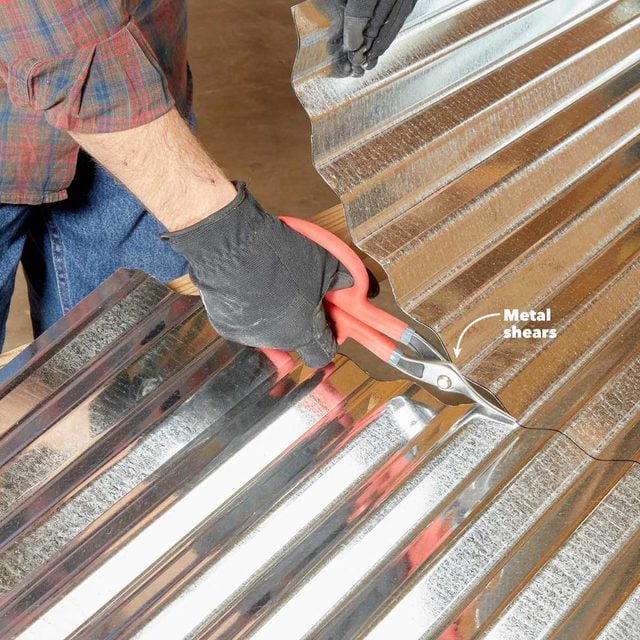
- Measure carefully: Double-check the exact dimensions needed for your metal panels based on the completed box frame. Typically, you’ll need panels for all four sides.
- Safety first: Put on heavy-duty work gloves before handling the corrugated metal, as the edges are extremely sharp and can cause serious cuts.
- Mark cutting lines: Use a straight edge and marker to indicate precise cutting lines on the metal panels. Allow for overlap at corners if your design requires it.
- Position for cutting: Place the panel on a stable surface with the cutting line extending just beyond the edge for easier cutting access.
- Cut with metal shears: Using metal shears (either hand-operated or electric), carefully cut along your marked lines. For straight, long cuts, make slow, controlled movements to avoid warping the metal.
- Smooth rough edges: After cutting, use a metal file to gently smooth any rough or sharp edges, providing additional safety during the installation process.
- Test fit: Temporarily position the cut panels against the box frame to verify proper sizing before permanent installation.
Step 5: Install the Metal Panels
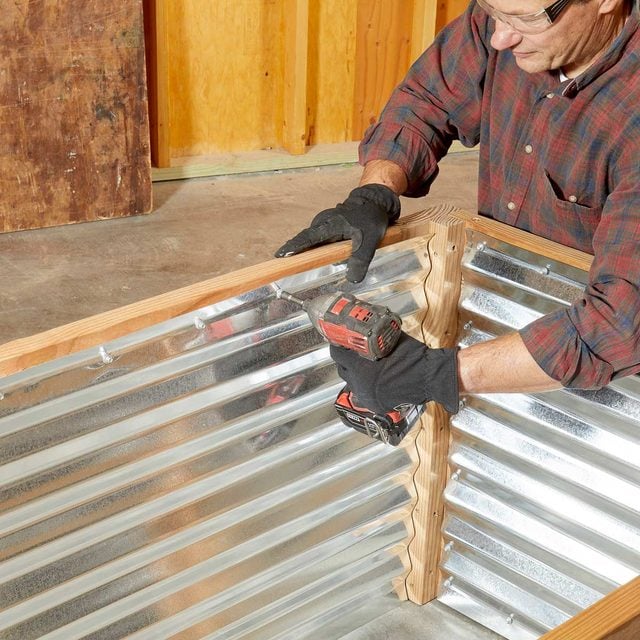
- Prepare the panels: Clean any metal shavings or debris from the panels before installation. Position the first panel against one side of the box frame, aligning it with the top and bottom rails.
- Add washers to screws: Place rubber or neoprene washers on your 1-inch sheet metal screws. These prevent water infiltration and provide a secure grip without damaging the metal.
- Create a screw pattern: Mark screw positions every 8 inches along the top and bottom edges of each panel. For side edges, mark positions that align with every second corrugation rib.
- Pre-drill pilot holes: Using a drill bit slightly smaller than your screw diameter, create pilot holes through both the metal and wood frame at your marked positions.
- Secure the panels: Drive sheet metal screws with washers through the pre-drilled holes, being careful not to overtighten which could dent the metal or strip the wood.
- Check for sharp edges: After installing each panel, run your gloved hand (carefully) along the exposed edges to identify any particularly sharp points that might need additional attention.
- Continue around the box: Repeat the process for all four sides, maintaining consistent alignment and screw spacing throughout.
Step 6: Reinforce with Plywood
- Measure for plywood backing: Take precise measurements of each interior panel area where plywood reinforcement will be installed.
- Cut plywood panels: Using a circular saw, cut the treated plywood to the dimensions required for each side. Sand any rough edges to prevent liner punctures later.
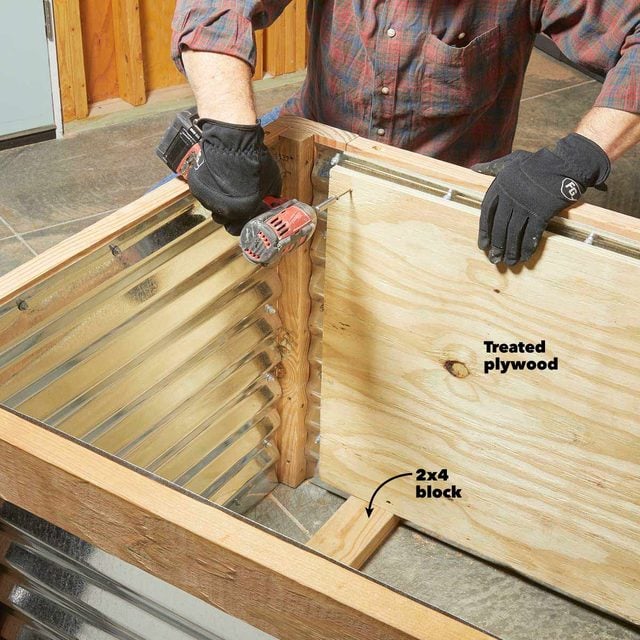
- Create positioning blocks: Cut small blocks from 2×4 lumber to serve as temporary positioning aids during plywood installation.
- Position the plywood: Place the 2×4 blocks at the bottom of the box interior, then rest the plywood panel on these blocks to achieve proper positioning against the metal.
- Pre-drill through assembly: With the plywood correctly positioned, pre-drill holes through the plywood, metal, and into the frame. Space holes approximately 12 inches apart in a grid pattern.
- Secure the plywood: Drive 2-inch deck screws through the pre-drilled holes to fasten the plywood securely to the metal and frame.
- Verify stability: Once attached, press firmly on the plywood to ensure it provides solid backing for the metal panels with no flexing or movement.
- Repeat for all sides: Install plywood reinforcement on all four interior sides following the same methodology.
Step 7: Add Interior Lining
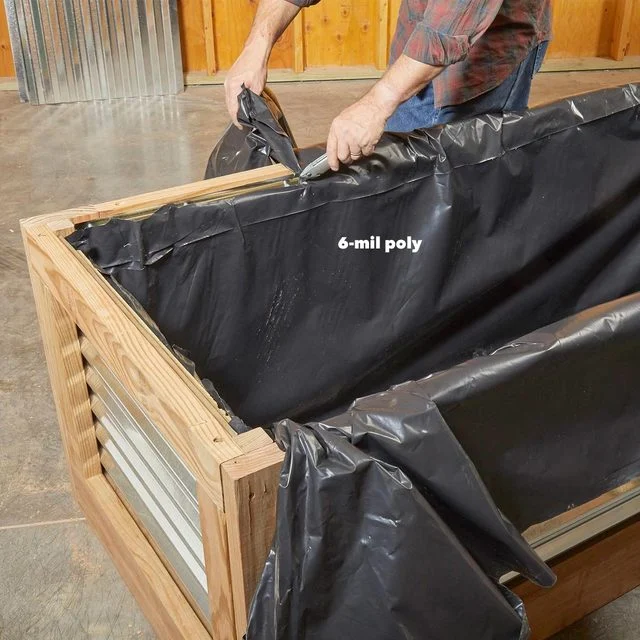
- Prepare the plastic sheeting: Unroll the 6-mil plastic sheeting and cut pieces large enough to cover each interior side with approximately 6 inches of excess on all edges.
- Position the liner: Starting with one side, position the plastic sheet against the interior plywood, smoothing out any wrinkles or folds.
- Secure the top edge: Using a stapler with 1/4-inch stainless steel staples, attach the top edge of the plastic to the upper wood frame. Place staples approximately every 4 inches.
- Work downward: Continue securing the plastic by working from the top down, smoothing the material as you go to eliminate air pockets or wrinkles.
- Handle corners carefully: At corners, fold the plastic neatly to create overlapping flaps, similar to wrapping a gift. Secure these folds with additional staples.
- Complete all sides: Repeat the process for the remaining interior sides, ensuring complete coverage with plastic overlapping at all seams and corners.
- Trim excess material: Using a sharp utility knife, carefully trim any excess plastic that extends above the top edge of the box. Leave about 1/2 inch to fold over the top edge for a clean finish.
Step 8: Complete the Rim
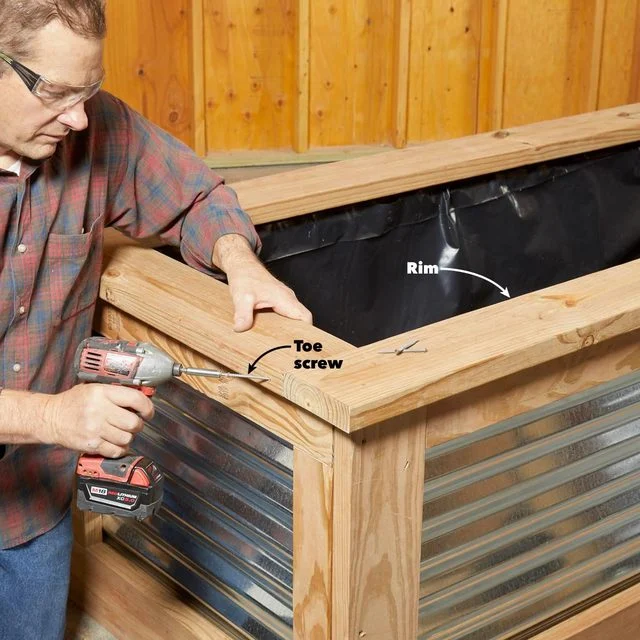
- Measure for rim pieces: Take final measurements of the assembled box’s top perimeter, accounting for the thickness of the wood when calculating corner joints.
- Cut rim boards: Using 2×6 treated lumber, cut the rim pieces (L and M) to the required lengths. For the most professional appearance, cut ends precisely at 90-degree angles.
- Test fit the rim: Temporarily position all rim pieces on the box to verify proper fit. Make any necessary adjustments before final installation.
- Secure the rim boards: Starting with one long side, position the rim board flush with the outside edge of the box and secure with 2½-inch deck screws driven from the top down into the frame. Space screws approximately every 12 inches.
- Address corner joints: At each corner, ensure the rim boards meet cleanly. If necessary, add toe screws at the joints to maintain flush surfaces and prevent future separation.
- Check for level and square: Once all rim boards are attached, check that the top surface is level and corners are square. Make any final adjustments as needed.
- Sand exposed edges: For safety and appearance, lightly sand any rough edges or splinters from the rim boards to create a smooth, finished look.
- Optional finish treatment: If desired, apply a water-resistant finish to the rim boards for additional protection and aesthetic enhancement.
With these detailed steps completed, your raised garden bed’s main structure is now ready for installation in your garden space. The reinforced design with corrugated metal and plywood backing creates a durable, attractive planter that will withstand the elements for many growing seasons.
Practical Enhancement Options
Pest Protection System
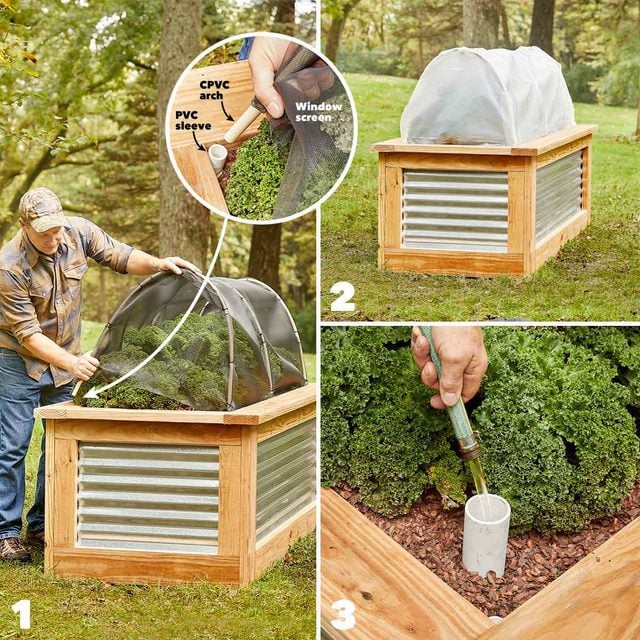
Create simple arched supports using 5-foot sections of 1/2-inch CPVC pipe. These can be bent and inserted into 12-inch sleeves made from 1-inch PVC pipe. Cover with fiberglass window screen to protect your crops from birds and other wildlife.
Season Extension Cover
The same arch framework can support plastic sheeting, creating a “cold frame” effect. This allows earlier planting in spring and provides frost protection in autumn.
Self-Watering Reservoir
Install a buried water reservoir system that maintains consistent soil moisture for weeks, reducing watering frequency to once monthly.
Installation Tips
- Position your planter and mark its footprint by cutting into the soil around it
- Move the planter aside and dig a shallow perimeter trench about 2 inches deep
- Reposition the planter and check for level in both directions
- Adjust by adding soil or deepening the trench until perfectly level
- Create drainage slits in the bottom of the plastic liner (unless installing a self-watering system)
Soil-Saving Tip: These planters require nearly a cubic yard of soil, but you can reduce this volume by filling the bottom portion with alternative materials. Sealed plastic milk jugs or upside-down plastic buckets create effective filler that reduces both weight and soil requirements.
By following these instructions, you’ll create attractive, functional raised garden beds that enhance your outdoor space while making gardening more enjoyable and productive for years to come.