Transform Your Garden With Coffee Grounds: The Ultimate Guide to Recycling This Kitchen Waste
Coffee grounds represent one of the most accessible and versatile organic materials for garden enrichment, offering benefits from soil amendment to pest deterrence. While many gardeners have heard that coffee grounds can benefit plants, confusion persists about which plants truly thrive with this amendment, how to apply it correctly, and when it might cause more harm than good. This comprehensive guide explores the science-backed benefits of coffee grounds in the garden and provides practical advice for incorporating this household waste into your sustainable gardening practice.
Understanding Coffee Grounds as a Garden Amendment
Before applying coffee grounds to your garden, it’s important to understand their composition and how they interact with your soil ecosystem.
Composition and Properties
Fresh coffee grounds contain approximately:
- Nitrogen (2%): A primary macronutrient essential for leaf and stem growth
- Phosphorus (0.3%): Supports root development and flowering
- Potassium (0.3%): Promotes overall plant health and disease resistance
- Calcium, magnesium, and other trace minerals
- Organic matter (95%+): Improves soil structure when properly decomposed
Coffee grounds have a pH between 6.5 and 6.8 after brewing, making them slightly acidic to neutral – not as acidic as many gardeners believe. Used coffee grounds have had much of their acidity removed through the brewing process.
Benefits in the Garden
Coffee grounds offer multiple advantages when incorporated correctly:
- Slow-Release Fertilization: Grounds release nitrogen and other nutrients gradually as they decompose.
- Soil Structure Improvement: The fine particles help create better tilth in clay soils over time.
- Beneficial Microbial Activity: Coffee grounds can support fungal and bacterial communities that break down organic matter.
- Moisture Retention: When incorporated into soil, grounds can improve water-holding capacity.
- Earthworm Attraction: Worms are typically drawn to areas enriched with coffee grounds, further enhancing soil health.
- Pest Deterrence: Some evidence suggests coffee grounds may repel slugs, snails, and cats through both physical and chemical properties.
Which Plants Like Coffee Grounds in the Garden
Not all plants respond equally to coffee grounds. Understanding which plants benefit most helps you target your applications effectively.
Acid-Loving Plants
While used coffee grounds are less acidic than commonly believed, they can still benefit acid-loving plants when applied properly:
- Blueberries: These shallow-rooted shrubs appreciate the slight acidity and slow-release nutrients.
- Azaleas and Rhododendrons: These flowering shrubs often show improved growth and blooming when coffee grounds are incorporated into their mulch.
- Camellias: Similar to their relatives, azaleas, camellias respond well to the nutrients in coffee grounds.
- Hydrangeas: Particularly blue hydrangeas, which require acidic soil to maintain their color.
- Hollies: Both evergreen and deciduous varieties can benefit from occasional coffee ground applications.
Vegetables That Benefit From Coffee Grounds
Several vegetables show positive responses to coffee grounds:
- Carrots and Radishes: Root vegetables often develop better in soil amended with composted coffee grounds.
- Tomatoes: When used sparingly, coffee grounds can boost tomato growth through improved soil structure and nutrition.
- Peppers: Both sweet and hot peppers can benefit from the nitrogen in coffee grounds.
- Spinach and Lettuce: Leafy greens, which need nitrogen for foliage development, often respond well.
- Cabbage Family: Broccoli, Brussels sprouts, and cauliflower typically show positive growth responses.
Flowers and Ornamentals
Many flowering plants perform well with coffee ground amendments:
- Roses: Many rose growers report improved blooming when coffee grounds are incorporated into the soil.
- Lilies: Easter lilies and Asiatic lilies often benefit from the nutrients in coffee grounds.
- Violets: African violets and garden violets typically respond positively to diluted coffee ground applications.
- Flowering Vines: Clematis and morning glories may show more vigorous growth and blooming.
Native and Woodland Plants
Plants that naturally grow in forest environments often thrive with coffee ground amendments:
- Ferns: Many fern varieties evolved in humus-rich forest floors similar to coffee-amended soil.
- Wild Ginger: This woodland groundcover appreciates the organic matter from coffee grounds.
- Astilbe: These shade-loving perennials benefit from the moisture retention of coffee grounds.
- Bleeding Heart: These spring-flowering perennials often respond well to soil enriched with coffee grounds.
Plants That May Not Like Coffee Grounds
Despite their benefits, coffee grounds aren’t suitable for all plants:
- Geraniums: These popular bedding plants often show stunted growth with direct coffee ground application.
- Lavender: Prefers lean, sandy soil; the moisture retention of coffee grounds can cause root issues.
- Mediterranean Herbs: Rosemary, thyme, and sage prefer drier, less rich soil conditions.
- Succulents and Cacti: The moisture retention of coffee grounds can cause root rot in these drought-adapted plants.
How to Use Used Coffee Grounds as Fertilizer
The method of application significantly impacts the effectiveness of coffee grounds in your garden.
Composting Coffee Grounds First (Recommended)
The most beneficial way to use coffee grounds is to compost them before application:
- Add to Compost Bin: Mix coffee grounds with carbon-rich “brown” materials like dry leaves or newspaper at a ratio of approximately 1:3 (coffee:browns).
- Layer in Sheet Composting: Alternate thin layers (no more than 1/2 inch) of coffee grounds with other compost materials directly in garden beds in fall for spring planting.
- Vermicomposting: Worms process coffee grounds efficiently, creating nutrient-rich castings. Limit coffee grounds to 25% of what you feed your worms.
Direct Soil Application
If using uncomposted grounds:
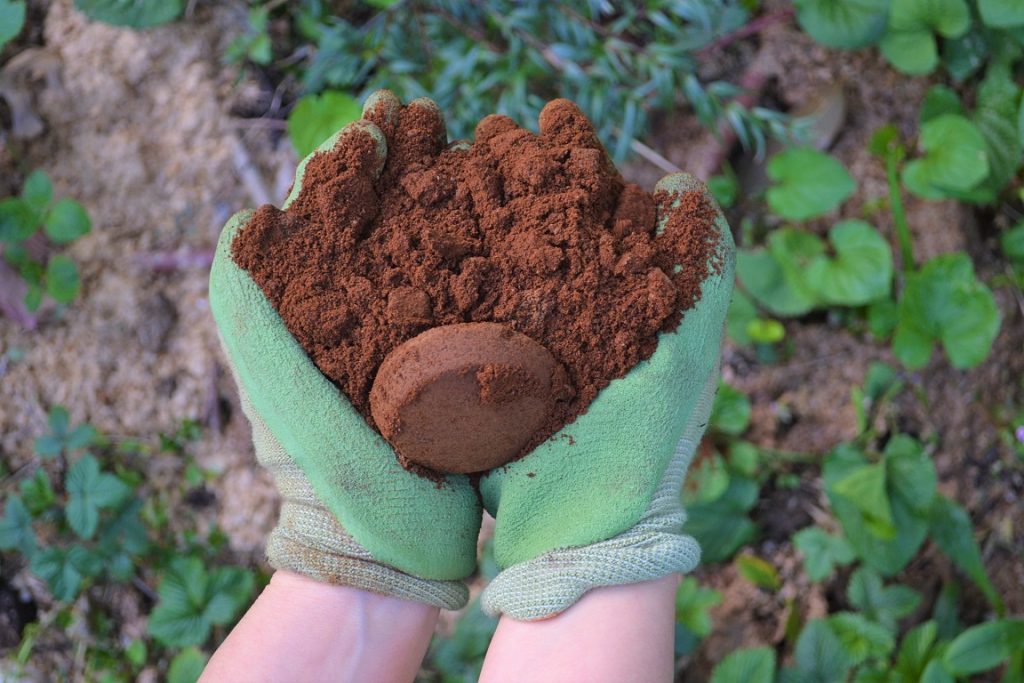
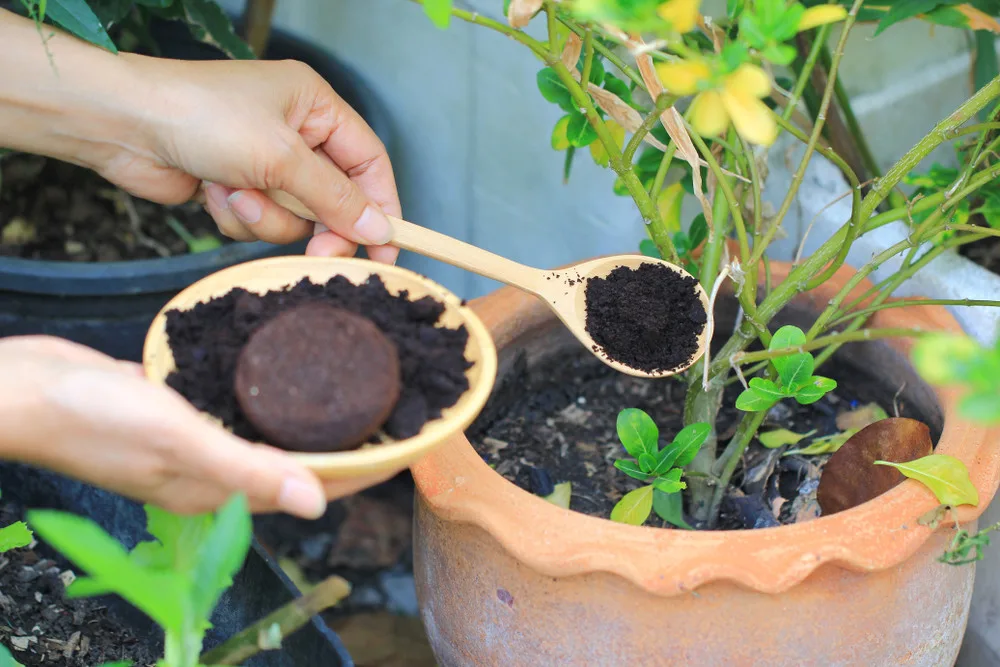
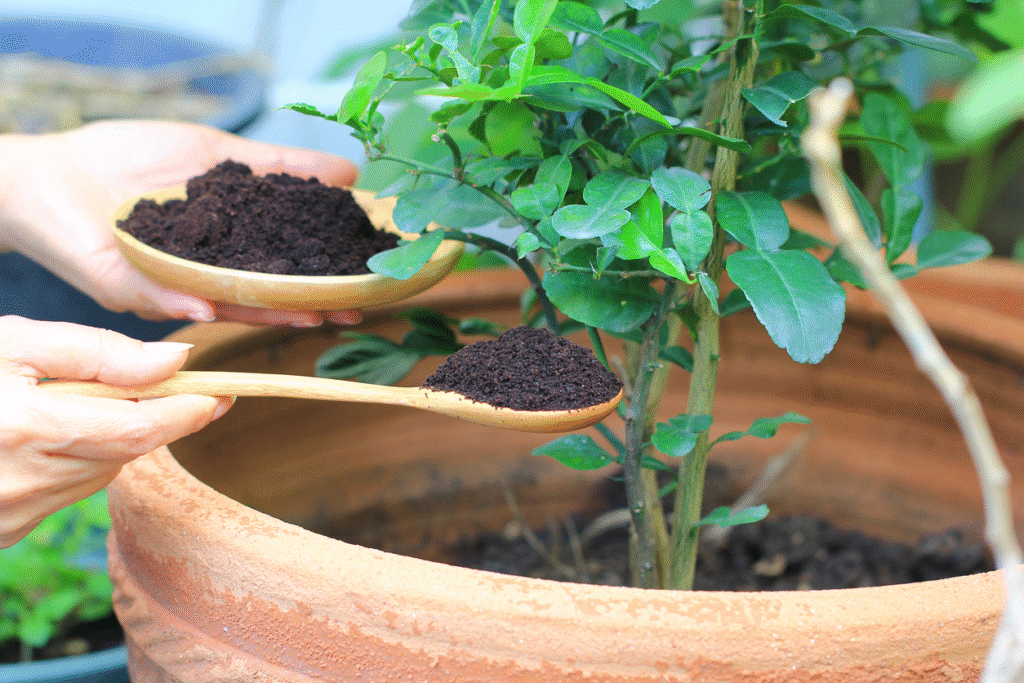
- Scratch into Top Layer: Mix no more than 1/2 cup of grounds per mature plant into the top 2-3 inches of soil, keeping grounds away from direct contact with stems.
- Use Sparingly: Limit applications to once monthly during growing season to prevent nitrogen lock-up or fungal issues.
- Shallow Incorporation: Coffee grounds applied to the surface can form a water-repellent crust; always mix them into the soil.
Liquid Fertilizer (“Coffee Ground Tea”)
Create a gentle liquid fertilizer:
- Steep 2 cups of used coffee grounds in 5 gallons of water for 24 hours.
- Strain the mixture through cheesecloth or a fine sieve.
- Apply the resulting liquid as a soil drench or foliage spray at half-strength for seedlings and full-strength for established plants.
- Use within 24 hours to prevent unwanted bacterial growth in the solution.
Mulching with Coffee Grounds
When using as mulch:
- Mix with Other Materials: Combine coffee grounds with traditional mulch materials like wood chips, straw, or leaves at a ratio of 1:4 (coffee:other mulch) to prevent crusting.
- Apply Thinly: Keep coffee ground mulch layers under 1/2 inch thick.
- Refresh Regular Mulch: Sprinkle grounds lightly over existing mulch and rake in gently rather than creating a separate layer.
Addressing Common Concerns and Myths
Several misconceptions exist about using coffee grounds in gardens:
Myth: Coffee Grounds Make Soil Very Acidic
Reality: Used coffee grounds have a near-neutral pH (6.5-6.8). While they may slightly influence soil pH temporarily, they won’t significantly acidify soil long-term. Fresh, unused grounds are more acidic but rarely used in gardening.
Myth: More Coffee Grounds Mean Better Results
Reality: Excessive application can create:
- Nitrogen immobilization (as microbes consume nitrogen to break down the coffee)
- Water-repellent crusting on soil surface
- Potential fungal overgrowth
- Compaction in heavy soils
Myth: Coffee Grounds Immediately Feed Plants
Reality: The nutrients in coffee grounds must be broken down by soil microorganisms before becoming available to plants, making them a slow-release amendment rather than an immediate fertilizer.
Coffee Grounds as Pest Management
Coffee grounds can assist with certain garden pest issues:
Slug and Snail Deterrent
The abrasive texture and caffeine content may deter these mollusks:
- Create a barrier around vulnerable plants with dry, used grounds
- Reapply after rain or heavy dew
- Combine with crushed eggshells for enhanced effectiveness
Cat Deterrent
To discourage cats from using garden beds as litter boxes:
- Mix coffee grounds with orange peels
- Sprinkle around garden perimeters
- Refresh after rainfall
Potential Ant Management
Some gardeners report success using coffee grounds to disrupt ant trails:
- Sprinkle grounds along known ant pathways
- Create a barrier around plants prone to aphid farming by ants
- Reapply every few days until ant activity diminishes
Project Showcase: Coffee Ground Garden Transformations
Urban Container Garden Renovation
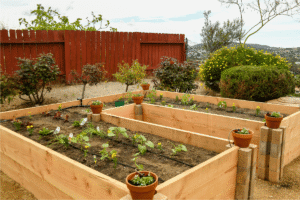
Site Conditions: Apartment balcony with potted plants, depleted potting soil Application Method: Monthly addition of composted coffee grounds mixed with potting soil Key Plants: Cherry tomatoes, basil, peppers, marigolds Results: 35% increase in tomato yield, visibly improved leaf color in all plants, reduced fertilizer needs
Suburban Rose Garden Enhancement
Site Conditions: Clay soil, established rose beds with nutrient deficiencies Application Method: Coffee ground tea applied biweekly, grounds incorporated into mulch Key Plants: Hybrid tea roses, floribundas, climbing roses Results: More blooms per plant, increased resistance to black spot, improved soil tilth after one season
Rural Vegetable Garden Soil Building
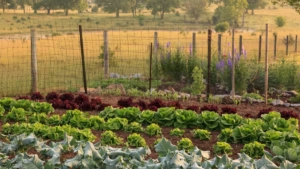
Site Conditions: Sandy loam with poor organic matter content Application Method: Sheet composting with coffee grounds collected from local cafe Key Plants: Root vegetables, leafy greens, berry bushes Results: Doubled soil organic matter in one year, improved water retention, reduced irrigation needs by 20%
Sustainable Sourcing of Coffee Grounds
Expand your coffee ground collection beyond your home brewing:
Community Partnerships
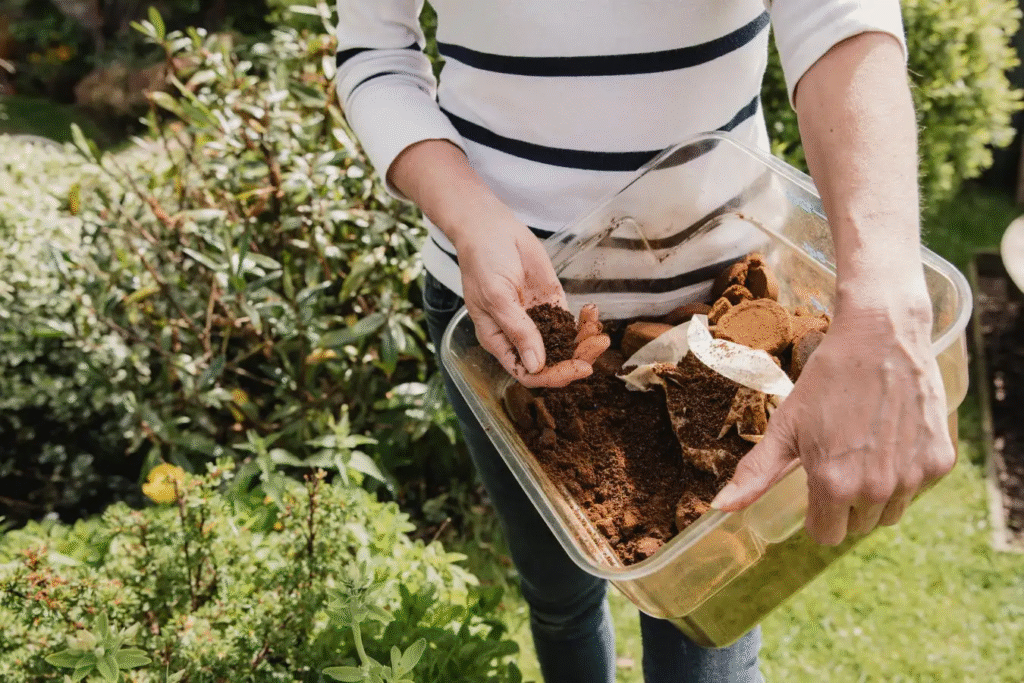
- Local Cafes: Many coffee shops are willing to set aside used grounds. Bring a bucket with a lid and establish a regular pickup schedule.
- Office Buildings: Set up a collection system in workplace break rooms where coffee consumption is high.
- Community Events: Offer to collect grounds from farmers’ markets, festivals, or faith community gatherings.
Storage Considerations
- Prevent Mold: Allow grounds to dry somewhat before storing in closed containers to prevent mold growth.
- Containment: Store in covered plastic buckets or compostable bags to control odors.
- Timing: Fresh grounds have higher nitrogen content; try to use within 2-3 weeks of collection.
Seasonal Application Guide
Timing coffee ground applications with seasonal needs maximizes benefits:
Spring (March-May)
- Incorporate composted coffee grounds into planting holes for new additions
- Apply coffee ground tea to emerging perennials
- Mix grounds into soil when preparing vegetable gardens
Summer (June-August)
- Use coffee ground tea during periods of high growth
- Add grounds to compost pile to maintain nitrogen balance
- Apply mixed mulch with coffee grounds to conserve moisture
Fall (September-November)
- Begin sheet composting with coffee grounds for spring beds
- Apply grounds around acid-loving perennials before winter
- Incorporate into soil when planting fall vegetables
Winter (December-February)
- Continue collecting grounds for spring use
- Add to indoor plant pots (sparingly)
- Maintain compost pile with occasional coffee ground additions
Monitoring and Adjusting Your Approach
Coffee ground application isn’t a one-size-fits-all practice. Observe your plants and adjust accordingly:
Signs of Positive Response
- Deeper green leaf color
- More vigorous growth
- Improved soil structure
- Increased earthworm activity
Warning Signs of Overuse
- White fungal growth on soil surface
- Stunted plant growth despite adequate conditions
- Water puddling or runoff rather than absorption
- Yellowing leaves (potential nitrogen immobilization)
Soil Testing
For serious gardeners:
- Conduct a soil test before beginning coffee ground amendments
- Retest annually to monitor changes in organic matter and pH
- Adjust application rates based on test results
Conclusion: Coffee Grounds as Part of Holistic Garden Care
Coffee grounds represent an excellent opportunity to recycle a common household waste into garden gold, but they function best as one component of a comprehensive soil-building strategy. Use them thoughtfully, observe your plants’ responses, and adjust your approach accordingly.
By understanding which plants benefit from coffee grounds and the most effective application methods, you’ll transform your morning coffee ritual into a sustainable practice that improves your garden’s health and productivity. Remember that, like most organic amendments, the benefits accumulate over time—patience and consistent application yield the best results.
Start small, experiment with different plants and application methods, and discover how this simple kitchen waste can become an integral part of your garden’s success story. Your plants, soil microbes, and local landfill will all thank you for your efforts to close this small but significant loop in your household’s waste stream.