Creating a Thriving Herb Garden Indoors: The Ultimate Guide
Growing herbs indoors offers a convenient way to enhance your cooking with fresh flavors year-round while bringing life and greenery into your home. Whether you’re dealing with limited outdoor space, harsh winters, or simply want herbs within arm’s reach of your kitchen, indoor herb gardening is a rewarding endeavor that can thrive in any home. According to the United States Department of Agriculture, indoor gardening has seen a 42% increase in popularity among urban households in recent years.
In this comprehensive guide, you’ll discover everything you need to know about creating and maintaining a flourishing indoor herb garden, from selecting the right plants and containers to harvesting techniques that encourage continued growth.
Why Start an Indoor Herb Garden?
Before diving into the “how,” let’s explore the “why” of indoor herb gardening:
- Fresh Herbs Year-Round: Regardless of season or climate, you’ll have access to fresh herbs whenever you need them.
- Cost-Effective: A single basil plant can provide the same amount of herbs you’d pay $20-30 for at the grocery store over several months.
- Superior Flavor: Freshly harvested herbs offer significantly more flavor than dried alternatives.
- Reduced Food Waste: Harvest only what you need when you need it, eliminating the common problem of store-bought herbs wilting in your refrigerator.
- Air Purification: Many herbs naturally filter indoor air pollutants.
According to the National Gardening Association, the US indoor gardening market has grown by 18.5% annually since 2020, reaching over $2.7 billion in 2024. This surge reflects both increased interest in home cooking and growing awareness of the benefits of bringing plants into living spaces.
Choosing the Right Herbs for Indoor Growing
Not all herbs thrive equally in indoor environments. When selecting which varieties to grow, consider your cooking preferences alongside each herb’s specific growing requirements.

Most Successful Indoor Herbs
The following herbs adapt particularly well to indoor conditions:
| Herb | Light Requirements | Water Needs | Beginner-Friendly | Growth Rate | Culinary Uses |
|---|---|---|---|---|---|
| Basil | High (6+ hrs direct) | Medium-High | ★★★★☆ | Fast | Italian, Thai, salads |
| Mint | Medium (4-6 hrs) | Medium | ★★★★★ | Very Fast | Desserts, drinks, Middle Eastern |
| Chives | Medium (4-6 hrs) | Medium | ★★★★☆ | Medium | Garnish, potato dishes, eggs |
| Rosemary | High (6+ hrs direct) | Low | ★★★☆☆ | Slow | Mediterranean, meat dishes |
| Thyme | Medium-High (5-6 hrs) | Low | ★★★★☆ | Medium | Soups, meats, all-purpose |
| Parsley | Medium (4-6 hrs) | Medium | ★★★★☆ | Medium | Garnish, salads, European |
| Cilantro | Medium (4-5 hrs) | Medium | ★★★☆☆ | Fast | Mexican, Asian, Indian |
| Oregano | Medium-High (5-6 hrs) | Low | ★★★★☆ | Medium | Italian, Greek, tomato dishes |
| Sage | High (6+ hrs direct) | Low | ★★★☆☆ | Medium | Poultry, stuffing, butter sauces |
| Lemon Balm | Medium (4-5 hrs) | Medium | ★★★★★ | Fast | Teas, desserts, salads |
Selecting Based on Your Home Environment
When choosing herbs, assess your available space:
- Limited Windowsill Space: Focus on compact herbs like thyme, oregano, and chives
- North-Facing Windows: Choose shade-tolerant herbs like mint, parsley, and chives
- South-Facing Windows: Take advantage of abundant light with basil, rosemary, and sage
- Low-Light Apartments: Consider supplementing with grow lights for best results
The Environmental Protection Agency (EPA) notes that indoor plants, including herbs, can help reduce indoor air pollutants by up to 87% over 24 hours, as detailed in their indoor air quality research.
Essential Equipment for Your Indoor Herb Garden
Creating the ideal environment for your herbs requires some basic equipment:
Containers and Potting
Your choice of containers significantly impacts herb health:
- Size: Choose pots 6-8 inches deep for most herbs; mint and basil benefit from larger containers
- Material: Terracotta pots provide excellent drainage but dry out faster; plastic retains moisture longer
- Drainage: All containers must have drainage holes to prevent root rot
- Self-watering options: Consider self-watering containers if you travel frequently
Soil and Fertilization
Indoor herbs need proper nutrition:
- Potting mix: Use high-quality, well-draining potting mix specifically formulated for containers
- Avoid garden soil: It’s too dense for containers and may contain pests or diseases
- Fertilization: Apply diluted liquid fertilizer monthly during growing season (spring/summer), less frequently in winter
- Organic options: Fish emulsion or seaweed fertilizers work well for culinary herbs
Lighting Solutions
Light is typically the most challenging factor for indoor herbs:
- Natural light: Most herbs need at least 4-6 hours of bright, indirect sunlight daily
- Window placement: South-facing windows provide the most light, followed by east, west, and north
- Signs of insufficient light: Leggy growth, pale leaves, slow growth
- Supplemental lighting: LED grow lights have become affordable and energy-efficient
- Light duration: When using grow lights, provide 12-14 hours daily for most herbs
According to market research by Garden Research, the indoor gardening equipment market in the US has seen an 27% increase in sales of LED grow lights specifically designed for herbs and small plants since 2022.
Step-by-Step Guide to Starting Your Indoor Herb Garden
Now that you understand the basics, let’s walk through the process of establishing your indoor herb garden:
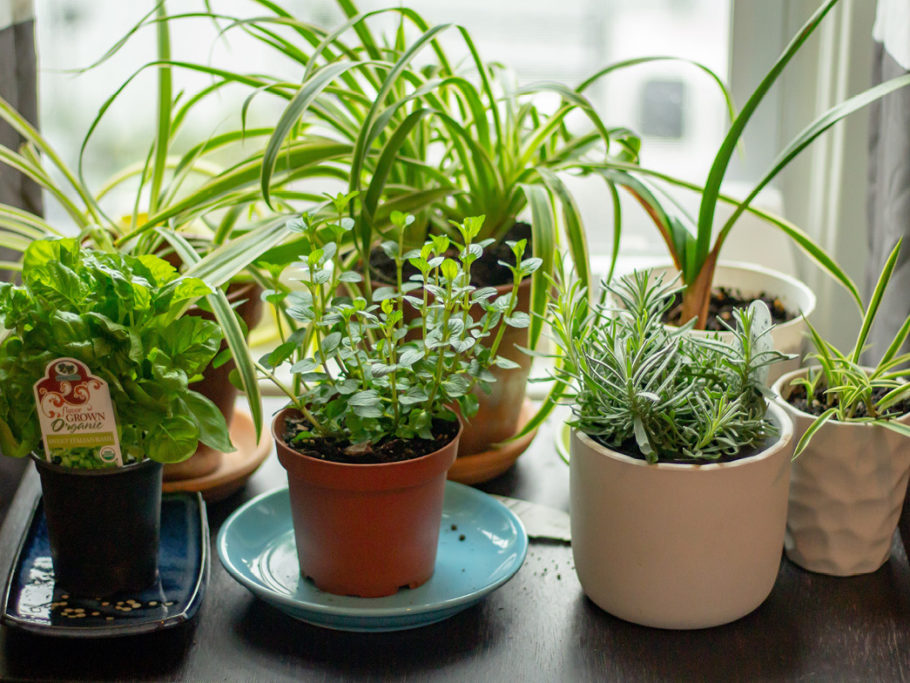
1. Planning Your Space
Before purchasing plants or supplies:
- Identify areas with adequate natural light
- Measure available space for containers
- Consider proximity to the kitchen for convenience
- Plan for possible expansion as your garden grows
2. Gathering Supplies
Basic startup supplies include:
- Containers with drainage holes
- High-quality potting mix
- Herbs (seeds, seedlings, or established plants)
- Watering can with fine spout
- Liquid fertilizer
- Labels (especially important if growing similar-looking herbs)
- Scissors or pruning shears for harvesting
3. Starting Your Herbs
You have three main options for establishing herbs:
From Seeds:
- Least expensive but slowest method
- Some herbs (parsley, cilantro) grow easily from seed
- Others (rosemary, thyme) can be challenging and slow to germinate
- Start seeds in small containers and transplant when established
From Cuttings:
- Take 4-6 inch cuttings from established plants
- Remove lower leaves and place in water or directly in soil
- Most herbs root within 2-3 weeks
- Particularly effective for mint, basil, and rosemary
From Purchased Plants:
- Most convenient and provides immediate results
- Look for healthy plants with no signs of pests or disease
- Often available at grocery stores, nurseries, and farmers markets
- Repot into appropriate containers upon bringing home
4. Proper Planting Techniques
When setting up your containers:
- Fill container with potting mix to about 1 inch below the rim
- Make a hole large enough for the root ball
- Place herb at the same depth it was previously growing
- Gently firm soil around the plant
- Water thoroughly until water drains from the bottom
- Place in appropriate light according to the herb’s needs
A survey by the National Gardening Association found that 64% of new indoor gardeners prefer starting with purchased plants rather than seeds, with basil, mint, and parsley being the most popular starter herbs.
Maintaining Your Indoor Herb Garden
Establishing your garden is just the beginning. Proper maintenance ensures longevity and productivity.
Watering Wisely
Improper watering is the most common cause of herb failure:
- Check before watering: Insert your finger about an inch into the soil; water only if it feels dry
- Water at soil level: Avoid wetting leaves, which can promote disease
- Adjust seasonally: Plants need less water in winter when growth slows
- Observe individual needs: Mediterranean herbs (rosemary, thyme, oregano) prefer drier conditions than basil or mint
- Signs of overwatering: Yellowing leaves, mushy stems, mold on soil surface
- Signs of underwatering: Wilting, dried leaf edges, slowed growth
Managing Light and Temperature
The environment around your herbs affects their health:
- Rotate containers: Turn pots a quarter turn weekly to promote even growth
- Seasonal adjustments: Move plants further from windows in extreme heat or cold
- Ideal temperature range: Most herbs prefer 65-75°F (18-24°C) during the day and no lower than 55-60°F (13-16°C) at night
- Avoid drafts: Keep herbs away from heating vents, air conditioners, and drafty windows
Pest Management
Even indoors, herbs can attract pests:
- Prevention: Inspect new plants thoroughly before bringing indoors
- Regular monitoring: Check under leaves and along stems weekly
- Common pests: Aphids, spider mites, whiteflies, and fungus gnats
- Organic solutions: Insecticidal soap, neem oil, or simply washing plants with mild soapy water
- Sticky traps: Yellow sticky cards help monitor and reduce flying insects
The USDA’s Integrated Pest Management database provides comprehensive resources for managing common herb garden pests using non-toxic methods.
Harvesting and Using Your Indoor Herbs
Proper harvesting techniques encourage bushier growth and increased yield:
Harvesting Techniques
Follow these guidelines for sustainable harvesting:
- Timing: Morning harvest (after dew has dried) provides the highest concentration of essential oils
- Amount: Never remove more than 1/3 of the plant at once
- Method: Use clean, sharp scissors rather than tearing
- Location: For most herbs, cut stems just above a leaf node to promote branching
- Frequency: Regular, light harvesting encourages fuller growth better than occasional heavy harvesting
Herb-Specific Harvesting Tips
Different herbs require slightly different approaches:
- Basil: Pinch off the top sets of leaves to prevent flowering and encourage bushiness
- Mint: Harvest outer stems first, allowing center growth to develop
- Parsley and Cilantro: Cut outer stems at the base, allowing inner growth to continue
- Rosemary and Thyme: Clip the top 2-3 inches of branches, avoiding woody stems
- Chives: Cut leaves about 2 inches from the soil level
Preserving Your Harvest
If your herbs produce more than you can use immediately:
- Refrigeration: Store cut herbs with stems in water (like flowers) for 1-2 weeks
- Freezing: Chop herbs and freeze in water or oil in ice cube trays
- Drying: Hang small bundles in a warm, dry place with good air circulation
- Herb butter: Mix chopped herbs into softened butter, then freeze in log form
- Infused oils: Steep fresh herbs in olive oil for flavored cooking oils
Troubleshooting Common Issues
Even experienced gardeners encounter challenges. Here are solutions to common problems:

Yellowing Leaves
Possible causes and solutions:
- Overwatering: Allow soil to dry between waterings
- Nutrient deficiency: Apply diluted liquid fertilizer
- Too much direct sun: Move to a location with filtered light
- Root-bound: Transplant to a larger container
Leggy, Sparse Growth
Typically indicates insufficient light:
- Move to a brighter location
- Add supplemental grow lights
- Prune regularly to encourage bushiness
- Rotate plants regularly for even exposure
Pest Infestations
If you notice pests:
- Isolate affected plants immediately
- Spray with insecticidal soap or neem oil
- For severe infestations, consider repotting with fresh soil
- Introduce beneficial insects like ladybugs for larger indoor gardens
Mold or Fungus on Soil
Usually indicates too much moisture:
- Improve air circulation around plants
- Water less frequently
- Remove affected top layer of soil
- Apply cinnamon (a natural fungicide) to soil surface
Expanding Your Indoor Herb Garden
As your confidence grows, consider these advanced approaches:
Hydroponic Systems
Soil-free growing offers several advantages:
- Faster growth rates
- Reduced pest issues
- More efficient use of space
- Options range from simple Mason jar setups to sophisticated multi-plant systems
Vertical Gardening
Maximize limited space:
- Wall-mounted planters
- Hanging baskets
- Tiered plant stands
- Repurposed shoe organizers or pallets
Automated Systems
Technology can simplify herb care:
- Self-watering containers with water reservoirs
- Smart plant monitors that track soil moisture, light, and temperature
- Automated lighting systems with timers
- All-in-one smart gardens with integrated lighting and watering
The National Institute of Food and Agriculture reports that interest in small-scale indoor growing systems has increased by 67% among urban US residents since 2019, corresponding with growing interest in food security and sustainable living practices.
Conclusion
Creating a thriving indoor herb garden combines science, art, and a touch of patience. By understanding the specific needs of your chosen herbs and creating an environment that mimics their natural growing conditions, you can enjoy fresh flavors year-round while bringing life and vitality to your living space.
Remember that each herb garden is unique, and part of the joy comes from experimenting and learning what works best in your particular environment. Start small with a few reliable herbs, establish good care routines, and gradually expand your collection as your confidence grows.
With the information in this guide, you’re well-equipped to embark on your indoor herb gardening journey. Within weeks, you’ll be harvesting fresh herbs for your culinary creations and enjoying the satisfaction that comes from nurturing plants from your own windowsill or kitchen counter.