
How To Hang An Upside Down Christmas Tree: A Comprehensive Guide
Are you looking to add a unique, eye-catching element to your holiday decorations this year? Hanging an upside down Christmas tree might be exactly what you need to create a conversation-starting centerpiece in your home. This unconventional approach to displaying your Christmas tree has gained significant popularity in recent years, combining medieval European tradition with modern design sensibilities.
In this comprehensive guide, you’ll learn everything you need to know about selecting, installing, decorating, and maintaining an upside down Christmas tree. From understanding the fascinating history behind this tradition to practical step-by-step instructions for safely hanging your tree, we’ve got you covered with expert advice and creative inspiration.
The History and Significance of Upside Down Christmas Trees
Before diving into the practical aspects of hanging an upside down Christmas tree, it’s worth understanding the rich history behind this unique tradition. Contrary to what many believe, upside down Christmas trees aren’t just a modern design trend – they actually have roots dating back to the Middle Ages in Central and Eastern Europe.
Medieval Origins
In 12th century Europe, particularly in regions that now comprise Poland, Ukraine, and parts of Scandinavia, hanging fir trees upside down was a common Christmas practice. According to historical records, this tradition began with the Boniface, a Benedictine monk who used the triangular shape of the fir tree to explain the Holy Trinity to pagans he was attempting to convert. The inverted position, with the point directed downward, symbolized Christ’s descent from heaven to earth.
These early trees were typically suspended from ceiling beams or chandeliers in the center of homes, creating more floor space in what were often small dwellings while keeping the decorated tree safe from curious children and animals.
Modern Revival
The upside down Christmas tree tradition largely disappeared for centuries until it experienced a revival in the early 2000s. Department stores and retail establishments first embraced the trend as an innovative way to display ornaments while maximizing floor space. Today, the practice has found its way into homes across America, valued not only for its space-saving benefits but also for its striking visual impact and conversation-starting potential.
As the U.S. Forest Service notes in their historical archives of Christmas tree traditions, “Alternative Christmas tree displays reflect both ancient traditions and modern adaptations to changing home environments and design preferences.” You can learn more about the historical evolution of Christmas tree traditions from the National Park Service, which provides fascinating insights into how these customs have evolved over centuries.
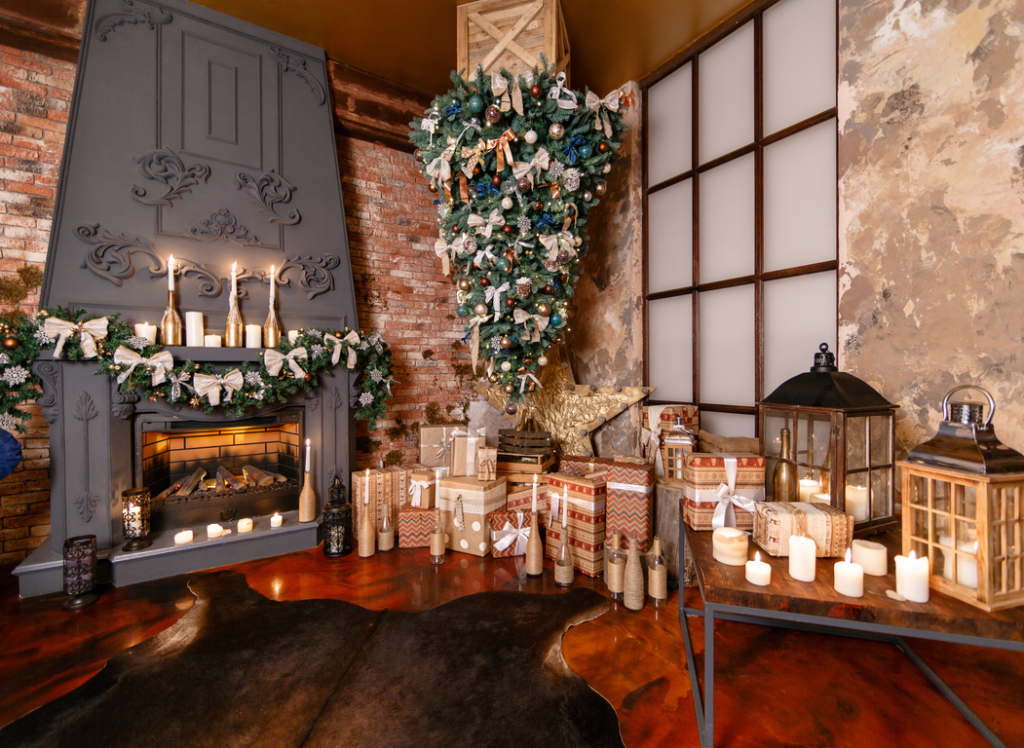
Choosing the Right Tree for Hanging Upside Down
Not all Christmas trees are suitable for hanging upside down. When selecting your tree, several key factors will determine how successful your display will be.
Artificial vs. Real Trees
While it’s technically possible to hang a real tree upside down, artificial trees are strongly recommended for this purpose. Here’s why:
- Structural Integrity: Artificial trees are designed with central poles and branch attachments that can more easily withstand the stress of being inverted.
- Weight Management: Artificial trees are typically lighter and have branches designed to hold their shape regardless of orientation.
- Needle Retention: Real trees will shed significantly more when hung upside down, creating a continuous mess.
- Watering Complications: The logistics of watering a real upside down tree present considerable challenges.
If you’re committed to using a real tree, you’ll need to ensure it’s very fresh, relatively small, and properly secured with additional support systems – a project best tackled by those with advanced DIY skills.
Size and Weight Considerations
When selecting an artificial tree for upside down hanging, keep these specifications in mind:
| Tree Height | Recommended Maximum Weight | Minimum Ceiling Height Required | Ideal Room Size |
|---|---|---|---|
| 4-5 feet | 15-20 pounds | 8 feet | Small (≤200 sq ft) |
| 6-7 feet | 25-30 pounds | 10 feet | Medium (200-300 sq ft) |
| 7-9 feet | 35-40 pounds | 12+ feet | Large (≥300 sq ft) |
Remember that these weights represent the tree itself without decorations. You’ll need to account for the additional weight of lights, ornaments, and any other decorations when planning your installation.
Pre-Lit vs. Unlit Options
Many specialty retailers now sell trees specifically designed to be hung upside down, with pre-installed mounting hardware and reinforced construction. These purpose-built trees offer significant advantages:
- Pre-Lit Options: Many upside down trees come with built-in lighting systems that are secured to withstand the inverted position.
- Weight Distribution: They’re engineered with proper weight distribution for hanging.
- Mounting Hardware: They typically include specialized mounting brackets designed for ceiling installation.
If you’re considering purchasing a tree specifically designed for upside down display, expect to invest a bit more than for standard artificial trees. However, the convenience and safety factors often justify the additional cost.
Essential Hardware and Safety Considerations
Successfully hanging an upside down Christmas tree requires proper hardware and a clear understanding of safety requirements. This isn’t a project to undertake casually, as an improperly secured tree could present serious hazards.
Required Hardware
The specific hardware you’ll need depends on your ceiling type and tree weight, but generally includes:
- Ceiling Mount or Hook: This must be rated to support at least twice the weight of your fully decorated tree.
- Swivel or Rotating Hook (optional): Allows the tree to rotate slightly, creating an interesting visual effect.
- Safety Cable: Always install a secondary safety cable as backup.
- Mounting Bracket: Either custom-designed for your tree or a universal model.
- Wall Anchors or Toggle Bolts: For secure installation into ceiling joists or beams.
- Tension Wire System: For larger trees or situations where drilling into the ceiling isn’t possible.
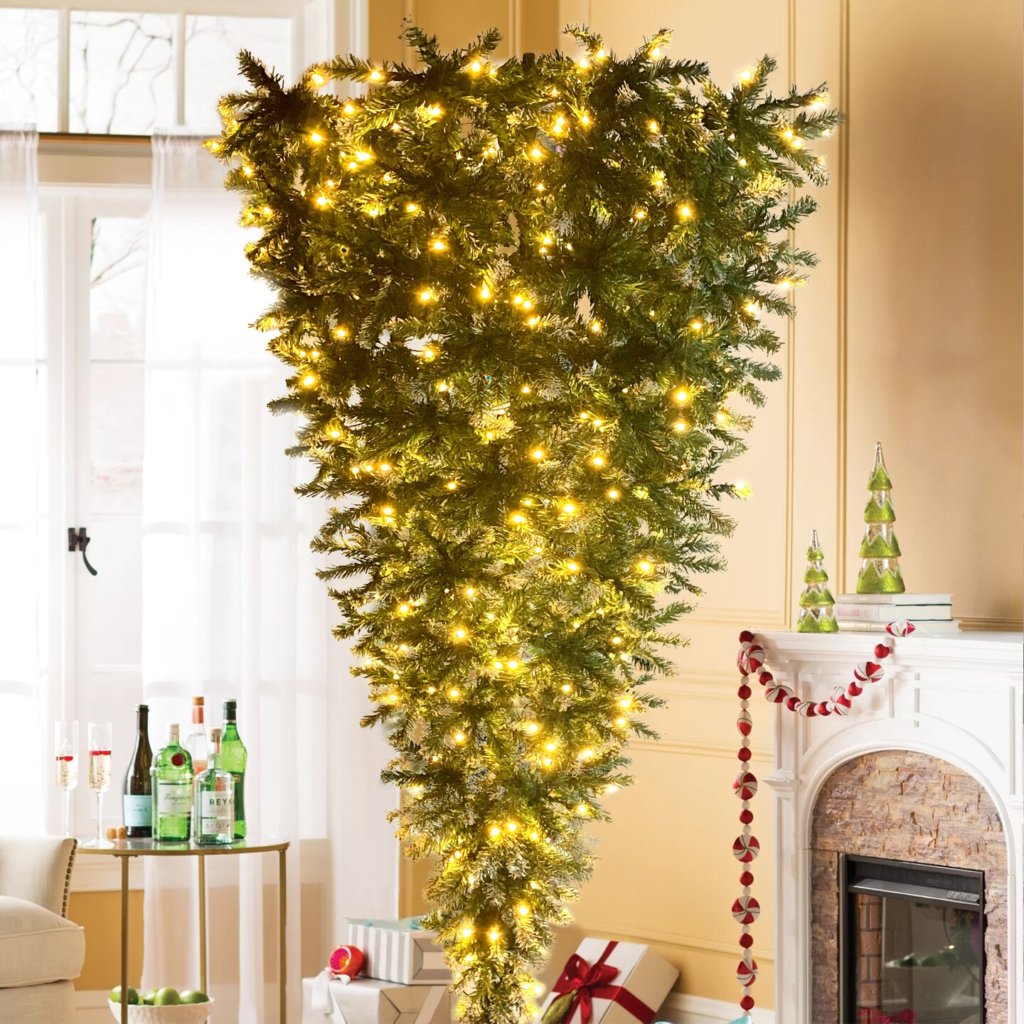
Weight Capacity and Structural Considerations
Before installation, you must verify that your ceiling can support the weight of your tree plus decorations. According to the American Society of Home Inspectors, standard residential ceilings with proper mounting into joists can typically support 15-20 pounds per square foot when properly distributed. However, this varies significantly based on construction methods, materials, and age of the building.
To ensure safety:
- Locate Ceiling Joists: Use a stud finder to locate joists – never attach heavy items to drywall alone.
- Check Local Building Codes: Some municipalities have specific regulations regarding ceiling-mounted objects. The U.S. Department of Housing and Urban Development provides guidelines on residential building standards that may be helpful in understanding structural limitations. Visit HUD’s Residential Structural Design Guide for more information.
- Consult Professionals: For trees exceeding 30 pounds or for installation in older homes, consulting a structural engineer or professional installer is highly recommended.
Installation Safety Checklist
Before beginning installation:
- Ensure you have a sturdy ladder that reaches your ceiling with at least two steps to spare
- Have an assistant to help stabilize the ladder and handle the tree during mounting
- Clear the area below of furniture and breakables
- Have appropriate tools ready, including a drill, appropriate bits, wrench set, and level
- Wear safety glasses when drilling overhead
- Review manufacturer guidelines for any tree-specific mounting instructions
Step-by-Step Installation Process
With the right preparation and equipment, installing your upside down Christmas tree can be accomplished safely in an afternoon. Follow these steps for a secure installation that will showcase your tree throughout the holiday season.
Preparation Steps
- Assemble the Tree Upright First: Even though your tree will ultimately be inverted, begin by assembling it in its normal, upright position. This allows you to check that all parts are present and functioning properly.
- Fluff and Shape the Branches: Take time to properly shape the branches while the tree is upright. This is much easier than trying to adjust them after the tree is hanging.
- Test Lights: If using a pre-lit tree, verify all lights are working before hanging. Replacing bulbs or sections is significantly more difficult once the tree is mounted.
- Pre-Plan Decoration Locations: Consider taking photos or making notes about where specific ornaments will go. This makes the decorating process smoother once the tree is hanging.
- Prepare Your Space: Clear the area where you’ll be working, ensuring you have enough room to maneuver around a ladder safely.
Ceiling Mounting Techniques
Depending on your ceiling type and tree weight, choose one of these mounting methods:
Method 1: Direct Joist Mounting (For Medium to Heavy Trees)
- Locate a Ceiling Joist: Use a stud finder to locate a ceiling joist. Mark the location with painter’s tape.
- Install the Ceiling Hook: Drill a pilot hole into the ceiling joist and install a heavy-duty ceiling hook rated for at least twice the weight of your decorated tree. For trees over 20 pounds, consider using a lag eye bolt instead of a standard hook.
- Secure the Tree’s Base: Attach the tree’s stand (normally the top point) to the ceiling hook using appropriate hardware. Many purpose-built upside down trees come with specialized mounting hardware.
- Install Safety Cable: Always add a secondary safety cable that connects from a different part of the tree’s internal structure to another secure point in the ceiling as a backup.
Method 2: Tension Wire System (For Rental Properties or When Drilling Isn’t Possible)
- Install Tension Wires: Set up a tension wire system that extends from wall to wall, passing over the area where you want to hang the tree.
- Attach Mounting Hardware: Secure appropriate hooks or fasteners to the tension wire system.
- Mount the Tree: Attach the tree to the mounting hardware, ensuring weight is evenly distributed.
- Secure with Safety Straps: Add safety straps that connect to different points on the tension system.
Stabilizing the Tree
Once your tree is hanging:
- Check for Level: Use a level to ensure your tree is hanging straight. Adjust as needed.
- Add Anti-Rotation Measures: If your tree tends to rotate, add small, nearly invisible fishing line from the tree to nearby wall anchor points to prevent movement.
- Test Stability: Gently push the tree from different angles to ensure it’s stable. If there’s excessive movement, additional stabilization is needed before decorating.
Decorating Strategies for Upside Down Trees
Decorating an upside down Christmas tree requires some adjustments to traditional techniques. The inverted position creates both unique challenges and opportunities for creative expression.
Adapting Traditional Decorating Techniques
When decorating your upside down tree, consider these adjustments:
- Start from the Bottom (Now the Top): Begin decorating from what would normally be the bottom of the tree, working your way toward the tip (now pointing downward).
- Secure Ornaments Differently: Standard ornament hooks may not hold as securely on an inverted tree. Consider using small zip ties or twist ties to ensure ornaments stay in place.
- Rethink Garland Placement: Drape garlands in shorter segments rather than continuous spirals to prevent them from sliding down.
- Light Distribution: If adding lights to an unlit tree, wrap them more tightly than you would on a traditional tree to prevent sagging.
Weight Distribution Considerations
Proper weight distribution is crucial for both safety and aesthetics:
| Location on Tree | Recommended Ornament Types | Weight Management Tips |
|---|---|---|
| Upper Third (Traditional Bottom) | Largest and heaviest ornaments | Space evenly around the circumference |
| Middle Section | Medium-sized ornaments | Mix weights to balance the tree |
| Lower Third (Traditional Top) | Lightest ornaments and finials | Focus on creating a visually appealing point |
Remember that the overall center of gravity shifts when a tree is inverted. Track the total weight of ornaments and aim for balanced distribution around the entire tree.
Creative Theme Ideas for Upside Down Trees
The unconventional nature of an upside down tree lends itself to creative decorating themes:
- Celestial/Night Sky: Create a progression from darker blue/purple at the top to lighter star-filled areas toward the bottom point, creating the illusion of the night sky.
- Cascading Waterfall Effect: Use tinsel or beaded garlands that flow downward from the wide top to the narrow point, mimicking a waterfall or fountain.
- Upside Down Winter Wonderland: Focus heavily on crystal and clear ornaments that create the impression of an ice formation or stalactites.
- Whimsical Topsy-Turvy: Embrace the unconventional nature with ornaments that feature upside down figures, optical illusions, or Alice in Wonderland themes.
- Minimalist Modern: For contemporary spaces, consider a monochromatic color scheme with ornaments of varying textures but similar hues.
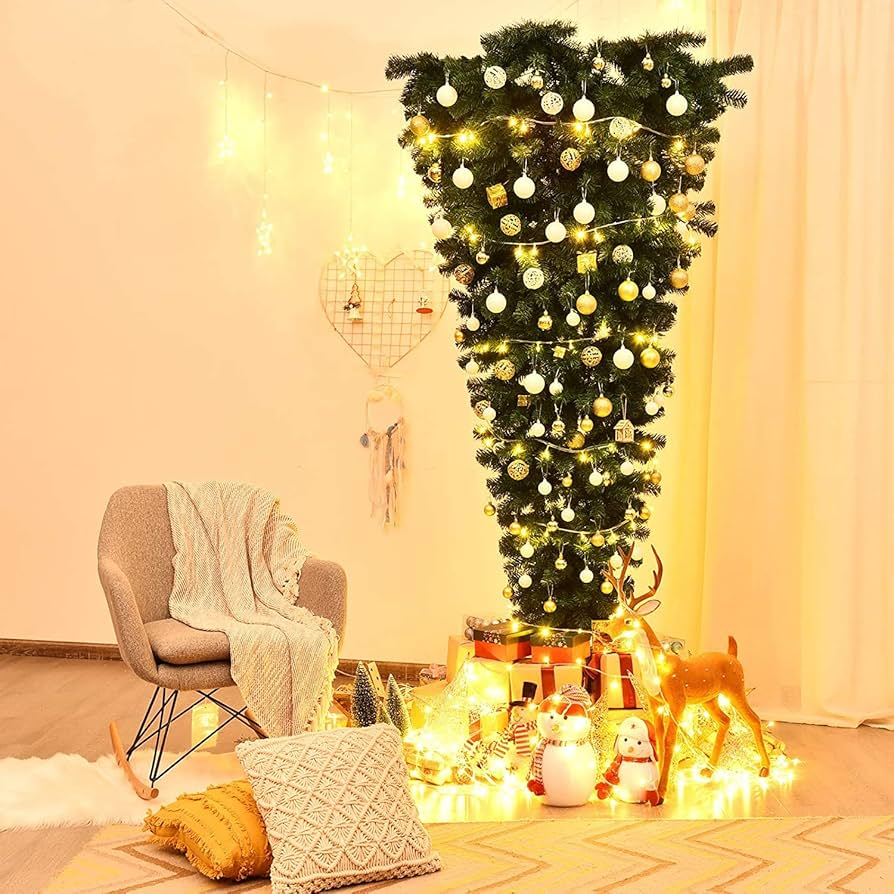
Tree Skirt Alternatives and Base Decorating
With an upside down tree, the traditional tree skirt becomes obsolete, but the exposed stand at the ceiling presents new decorative opportunities.
Ceiling Canopies and Covers
The area where your tree connects to the ceiling can be beautifully concealed with:
- Ceiling Medallion: Install a decorative ceiling medallion (available at home improvement stores) around the mounting point.
- Custom Fabric Canopy: Create a gathered fabric canopy that conceals the mounting hardware while adding texture and color.
- Wreath Adaptation: Modify a wreath with a center opening to fit around the tree’s base at the ceiling.
- Decorative Box: Build a lightweight decorative box that fits around the tree’s base and attaches to the ceiling.
Floor Decoration Options
The area beneath your upside down tree becomes a focal point:
- Gift Display: Since presents won’t be under the tree in the traditional sense, create an artful gift arrangement on a decorative table or platform below the tree.
- Holiday Village: Set up a miniature holiday village or nativity scene beneath the tree.
- Mirror Effect: Place a large decorative mirror on the floor beneath the tree to create the illusion of a reflected tree.
- Lighting Features: Install uplighting that illuminates the tree from below, creating dramatic shadows and highlighting ornaments.
Maintenance and Safety Throughout the Season
Once your upside down tree is installed and decorated, ongoing maintenance ensures it remains safe and beautiful throughout the holiday season.
Regular Safety Checks
Perform these safety checks at least weekly:
- Hardware Inspection: Check that all mounting hardware remains tight and secure.
- Tree Movement: Monitor for any increased movement or swaying, which could indicate loosening hardware.
- Ornament Security: Look for any ornaments that may have shifted and resecure them as needed.
- Light Function: For pre-lit trees, check for any sections that have gone out and address electrical issues promptly.
Addressing Common Issues
Some challenges specific to upside down trees include:
- Ornament Sliding: If ornaments slide down branches, use a dab of hot glue (which can be removed later) on the ornament hook to secure it in place.
- Tree Rotation: If your tree begins to rotate with air currents, add nearly invisible fishing line from several points on the tree to nearby wall anchors.
- Branch Drooping: Branches may begin to droop more than when initially installed. Periodically reshape them, working from the top (traditional bottom) to the tip.
- Light Strand Slippage: If light strands begin to slip, secure them to branches with small, clear zip ties.
Taking Down and Storing Your Upside Down Tree
When the holiday season ends:
- Remove Decorations First: Take off all decorations while the tree is still hanging.
- Use Two People: Have one person support the tree while another detaches it from the ceiling mount.
- Lower Carefully: Gently lower the tree and place it on its side.
- Disassemble in Reverse Order: Take the tree apart in the reverse order of assembly.
- Store Mounting Hardware Together: Keep all specialized hardware in a labeled container with the tree.
- Consider Storage Orientation: Some storage bags designed for upside down trees have special compartments for the reinforced base section.
Troubleshooting and FAQs
Even with careful planning, you may encounter challenges with your upside down Christmas tree. Here are solutions to common issues and answers to frequently asked questions.
Common Installation Problems and Solutions
Problem: The tree wobbles or seems unstable. Solution: First, verify that your mounting hardware is secured directly into a ceiling joist, not just drywall. If properly mounted but still wobbling, add a secondary stabilization system using clear fishing line running from multiple points on the tree to wall anchors.
Problem: The branches appear sparse or uneven when inverted. Solution: Upside down positioning may reveal gaps not noticeable when the tree is upright. Remove the tree and spend additional time “fluffing” branches, paying particular attention to areas that appeared sparse. Consider adding extra greenery picks to fill in noticeable gaps.
Problem: My rental agreement prohibits ceiling holes. Solution: Consider a freestanding upside down tree stand, which uses a heavy weighted base with an upward extending pole from which the tree hangs. These specialized stands are becoming increasingly available as the trend grows in popularity.
Problem: The tree rotates or spins with air currents. Solution: Prevent unwanted rotation by running nearly invisible fishing line from three points on the tree to nearby wall or ceiling anchors, creating a triangulation effect that prevents movement.
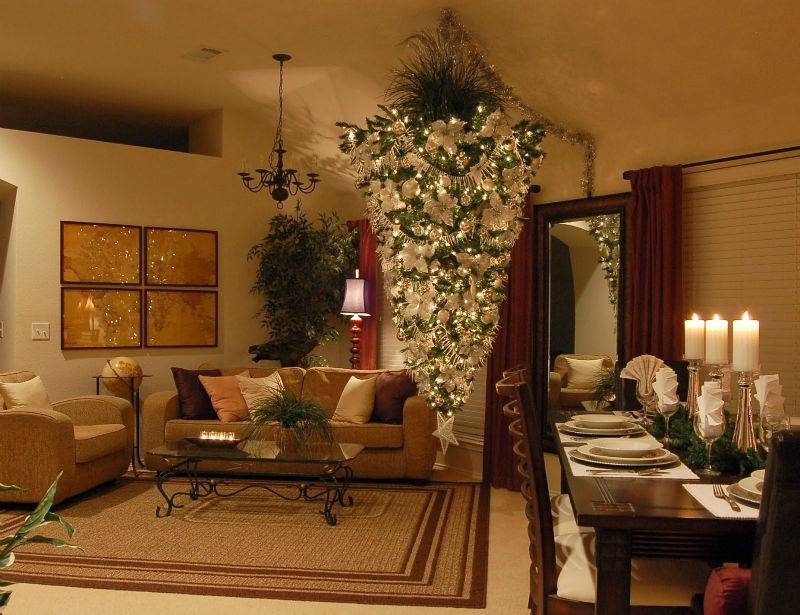
Frequently Asked Questions
Q: Can I hang my tree from a drop ceiling in a basement? A: Standard drop ceiling systems are not designed to support the weight of a Christmas tree. If you have a basement with a drop ceiling, you’ll need to locate the actual structural ceiling joists above the drop ceiling panels and mount directly to those.
Q: How do pets typically react to upside down trees? A: Many pet owners report that upside down trees actually reduce pet interference, as the branches are harder for cats to climb and the ornaments are generally out of reach of dogs. However, ensure that any hanging elements that extend down to pet-accessible height are securely attached and non-toxic.
Q: Will an upside down tree damage my ceiling? A: When properly installed into ceiling joists with appropriate hardware, an upside down tree should not damage your ceiling. However, improper installation into drywall alone can result in significant damage. Always follow weight guidelines and secure into structural elements.
Q: How do I handle tree lights with the plug at the wrong end? A: For pre-lit trees specifically designed to be hung upside down, the light strings are typically wired with this consideration in mind. For standard trees, you may need to use an extension cord run along the center pole of the tree, or rewire the lights to start from what will become the top (traditional bottom) of the tree.
Conclusion: Embracing a Unique Holiday Tradition
Hanging an upside down Christmas tree represents more than just an unusual decorating choice – it connects you to centuries-old traditions while making a bold, contemporary statement. This space-saving solution draws attention to your carefully chosen ornaments and creates a truly unique focal point for your holiday celebrations.
While installing an upside down Christmas tree requires more planning and care than setting up a traditional tree, the striking visual impact and conversation-starting potential make it well worth the effort. By following the guidelines in this comprehensive guide, you can safely create a stunning holiday display that may well become your new favorite tradition.
Whether you’re motivated by the historical significance, the practical advantages, or simply the desire to try something different this holiday season, an upside down Christmas tree offers a fresh perspective on a beloved tradition. With proper planning, appropriate hardware, and creative decorating, your inverted tree will delight family and friends throughout the holidays while showcasing your ornament collection in a truly distinctive way.
As you embark on this upside down adventure, remember that holiday traditions are meant to evolve and reflect your personal style. Don’t be afraid to experiment with this unconventional approach – after all, the best holiday decorations are those that bring you joy and create lasting memories for everyone who experiences them.