How To Fertilize A Lawn: The Complete Guide for a Lush, Green Yard
Fertilizing your lawn is one of the most important maintenance tasks you can perform to achieve that enviable, lush green carpet of grass that makes your neighbors stop and stare. When done correctly, fertilization provides your lawn with essential nutrients, strengthens its root system, and helps it withstand environmental stresses like drought, heat, and foot traffic. But knowing when, how, and what type of fertilizer to use can be confusing for many homeowners.
Understanding Your Lawn’s Nutritional Needs
Before you rush to the garden center and grab the first fertilizer you see, it’s important to understand what your lawn actually needs. Grass, like all plants, requires a variety of nutrients to thrive, but the three most important are nitrogen (N), phosphorus (P), and potassium (K).
The NPK Ratio: What Those Numbers Mean
When you look at a fertilizer bag, you’ll notice three numbers prominently displayed, such as 29-0-4 or 10-10-10. These numbers represent the percentage by weight of nitrogen (N), phosphorus (P), and potassium (K) in the fertilizer.
Each of these nutrients plays a specific role in your lawn’s health:
Nitrogen (N): Promotes lush, green growth and leaf development. It’s the nutrient your lawn needs in the largest quantities and what gives grass its vibrant color.
Phosphorus (P): Supports root development and is essential for new lawns or when overseeding. Many states now restrict phosphorus in lawn fertilizers due to environmental concerns about runoff.
Potassium (K): Enhances overall health, disease resistance, and drought tolerance. It helps your lawn handle stress and extreme weather conditions.
According to the United States Department of Agriculture (USDA), most established lawns need a fertilizer with a higher first number (nitrogen) and lower second and third numbers. A typical recommendation might be a ratio like 3-1-2 or 4-1-2. For more specific information on lawn fertility requirements, you can reference the USDA Natural Resources Conservation Service for detailed guidance.
When to Fertilize Your Lawn
Timing is everything when it comes to fertilizing your lawn. Apply it at the wrong time, and you might be wasting your money or even damaging your grass.
Seasonal Fertilization Schedule
The ideal fertilization schedule depends on the type of grass you have. In the United States, lawns generally fall into two categories: cool-season grasses and warm-season grasses.
| Grass Type | Best Times to Fertilize | Recommended Applications | Key Notes |
|---|---|---|---|
| Cool-Season (Kentucky Bluegrass, Fescue, Ryegrass) | Early spring (light), Early fall (heavy), Late fall | 2-4 times per year | Fall applications are most important; avoid heavy fertilizing in summer |
| Warm-Season (Bermuda, Zoysia, St. Augustine, Centipede) | Late spring, Early summer, Early fall | 2-3 times per year | Apply when grass is actively growing; reduce in cooler months |
For cool-season grasses, the fall is actually the most important time to fertilize. This is when your grass is recovering from summer stress and preparing for winter dormancy. A good feeding in early fall helps strengthen roots and build energy reserves for spring growth.
Warm-season grasses, on the other hand, benefit most from fertilization during their peak growing season in late spring and summer when soil temperatures are consistently above 65°F.
Reading Your Lawn’s Signals
Your lawn will often tell you when it needs nutrients. Signs that it might be time to fertilize include:
- Slow growth or thinning areas
- Pale or yellowish color (not the vibrant green you want)
- Poor recovery from foot traffic or other stress
- Increased weed pressure (healthy lawns naturally suppress weeds)
Remember that more is not better when it comes to fertilizer. Over-fertilizing can lead to rapid, weak growth, increased disease susceptibility, and environmental pollution from runoff.
Soil Testing: The Foundation of Smart Fertilization
Before applying any fertilizer, the smartest thing you can do is test your soil. A soil test will tell you exactly what nutrients your lawn lacks and what it has in abundance, allowing you to choose a fertilizer that addresses your specific needs rather than guessing.
Most county extension offices offer affordable soil testing services, often for under $20. These tests provide detailed information about your soil’s pH, nutrient levels, and sometimes even texture. The results typically come with specific recommendations for what type and amount of fertilizer to apply.
If your soil test reveals that your lawn’s pH is too acidic (below 6.0) or too alkaline (above 7.0), you might need to apply lime to raise the pH or sulfur to lower it before fertilizing. This is important because grass can only efficiently absorb nutrients when the soil pH is in the proper range (generally 6.0-7.0 for most lawn grasses).
Choosing the Right Fertilizer for Your Lawn
With your soil test results in hand and an understanding of your grass type, you’re ready to select the right fertilizer. You’ll have several important choices to make.
Synthetic vs. Organic Fertilizers
Synthetic Fertilizers: Synthetic or chemical fertilizers provide nutrients in forms that are immediately available to plants. They typically produce quick results, are less expensive per square foot of coverage, and have precise nutrient ratios.
However, they don’t improve soil structure, can harm beneficial soil microorganisms if overused, and may contribute to water pollution if applied incorrectly. They also tend to require more frequent application as they don’t provide long-lasting benefits.
Organic Fertilizers: Organic fertilizers are derived from plant or animal sources, such as compost, manure, bone meal, or seaweed extracts. They release nutrients slowly as they break down, improving soil structure and microbial activity in the process.
The benefits of organic fertilizers include fewer environmental concerns, less risk of “burning” your lawn with excess nitrogen, and long-lasting effects that improve soil health over time. The downside is they typically cost more, work more slowly, and may have less precise nutrient ratios.
For most homeowners, a balanced approach works well – perhaps using a quick-release synthetic fertilizer in early spring to jumpstart growth, then switching to organic options for summer and fall applications to build long-term soil health.
Different Forms of Fertilizer
Lawn fertilizers come in several forms, each with its own advantages:
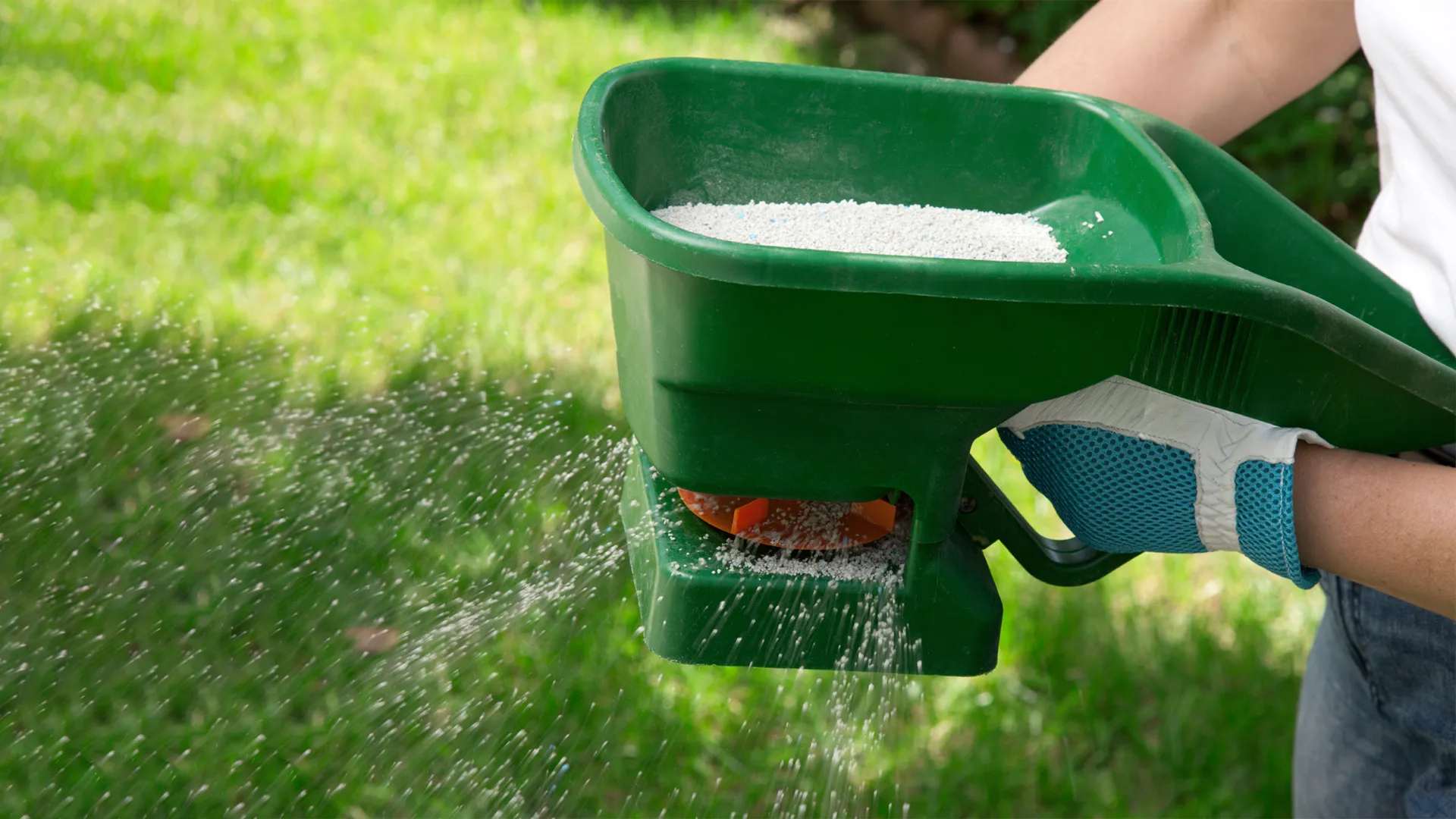
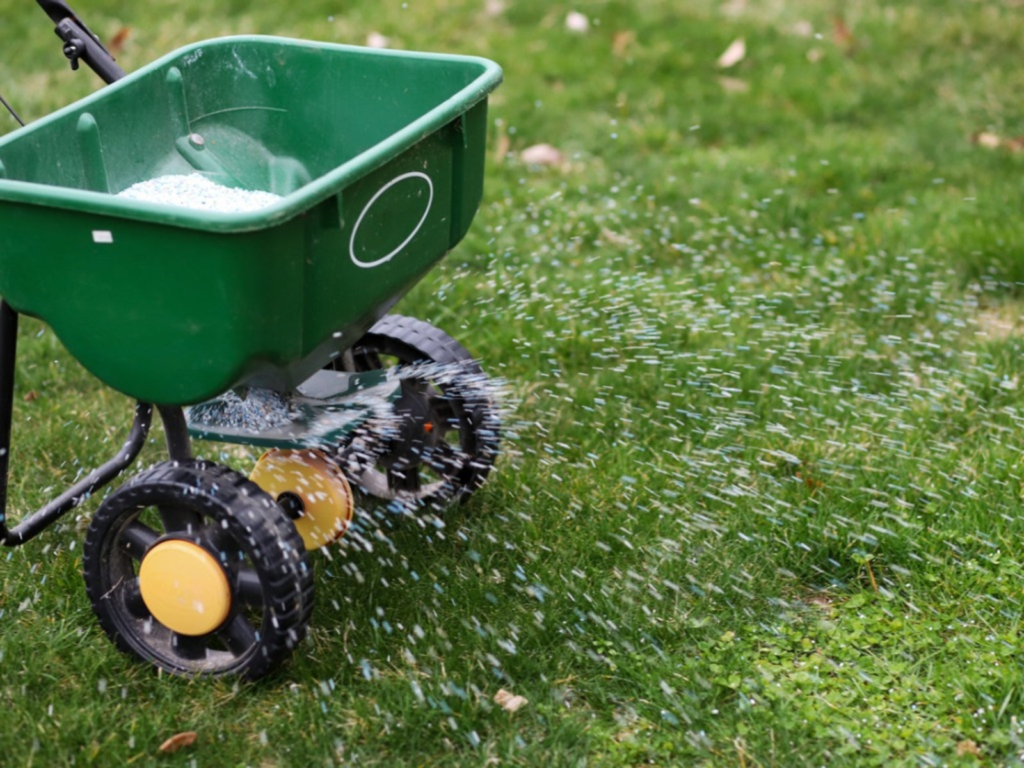
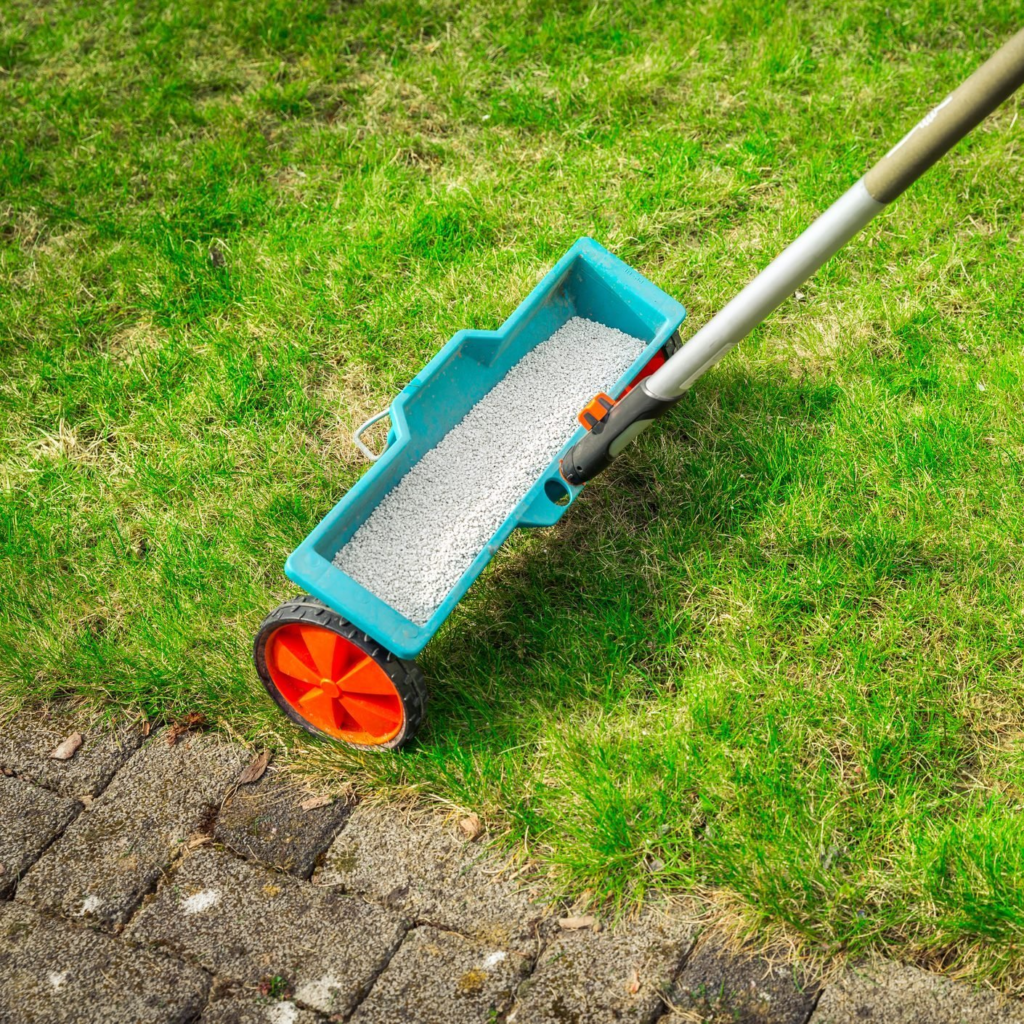
Granular Fertilizers: These dry pellets are spread across your lawn using a broadcast or drop spreader. They’re easy to apply evenly, and many are formulated as slow-release products that feed your lawn gradually over several months. Granular fertilizers are the most common type used by homeowners.
Liquid Fertilizers: Applied with a hose-end sprayer or as a concentrate that you mix with water, liquid fertilizers provide nutrients that are immediately available to grass. They’re good for quick green-up but typically don’t last as long as granular products.
Combination Products: Some fertilizers also contain weed killers (weed and feed products), insecticides, or disease control products. While convenient, these combinations may not always time optimally for all their functions, and they can limit when and how you apply the fertilizer.
How to Apply Fertilizer Correctly
Now that you’ve selected the right fertilizer and timed it appropriately, it’s time to apply it to your lawn. Proper application ensures even coverage without wasting product or risking environmental contamination.
Tools You’ll Need
- Broadcast spreader (for larger lawns) or drop spreader (for more precise application)
- Gloves
- Measuring tape or equivalent to calculate lawn area
- Container for pre-measuring fertilizer (if needed)
- Broom or blower to clean fertilizer off hard surfaces
Step-by-Step Application Process
1. Calculate your lawn’s square footage
Measure the length and width of your lawn in feet, then multiply them together to get the square footage. For irregularly shaped lawns, break the area into rectangles, calculate each separately, and add them together. This calculation is crucial because fertilizer packages specify how much product to use per 1,000 square feet.
2. Prepare your spreader
Fill your spreader with the appropriate amount of fertilizer for your lawn size. Do this on a hard surface like a driveway or sidewalk so you can easily clean up any spills.
3. Set the right spreader setting
Check the fertilizer package for the recommended spreader setting. If you can’t find specific guidance for your spreader model, start with a lower setting – you can always make another pass if needed.
4. Apply in a systematic pattern
For the most even coverage, apply half the fertilizer walking in one direction (north to south) and the other half walking in a perpendicular direction (east to west). This cross-hatch pattern helps prevent missed spots and stripes.
Keep the spreader wheels on previously treated paths as a guide to prevent gaps or double application. Walk at a steady pace – rushing can lead to uneven application.
5. Water appropriately after application
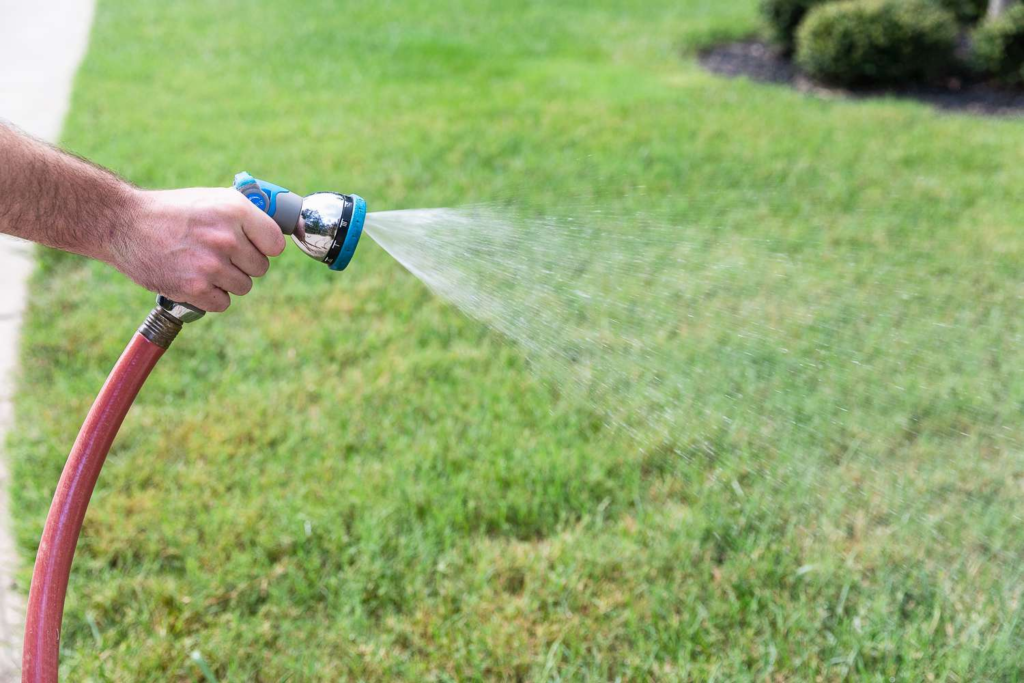
Most fertilizers need to be watered in to move the nutrients to the soil level where grass roots can access them. Water lightly after application, providing about ¼ inch of water – enough to dissolve granules but not so much that the fertilizer washes away.
If you’re using a slow-release or coated fertilizer, follow the specific watering instructions on the package, as some products have special requirements.
Safety and Environmental Considerations
Fertilizing your lawn isn’t just about growing greener grass – it’s also about being a responsible steward of the environment. Follow these important precautions:
- Never apply fertilizer before heavy rain is forecast, as this increases the risk of runoff into waterways.
- Keep fertilizer off hard surfaces like driveways and sidewalks. If spillage occurs, sweep it back onto the lawn rather than hosing it down.
- Maintain a fertilizer-free buffer zone of at least 10-20 feet around water features like ponds, streams, or drainage ditches.
- Store unused fertilizer in its original container, in a dry place, out of reach of children and pets.
The Environmental Protection Agency (EPA) provides extensive guidance on lawn care that minimizes environmental impact. According to their recommendations, homeowners should always follow label directions precisely and avoid over-fertilizing, which can lead to nutrient pollution in local waterways. For more detailed information, you can visit the EPA’s webpage on healthy lawn care practices.
Specialized Fertilization Situations
While the general principles of lawn fertilization apply broadly, certain situations call for specialized approaches.
New Lawn Establishment
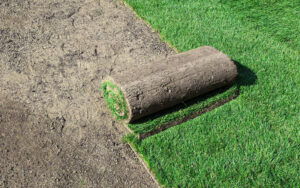
Whether you’re seeding a new lawn or laying sod, proper fertilization is critical to success. For new lawns, use a starter fertilizer with a higher phosphorus content (the middle number in the NPK ratio) to encourage strong root development.
Apply the starter fertilizer just before or during seed or sod installation, following package directions carefully. Once your new grass is established and has been mowed 3-4 times, transition to a regular maintenance fertilization schedule.
Overseeding Existing Lawns
When overseeding to thicken your lawn or repair thin spots, use a starter fertilizer just as you would for a new lawn. Apply it when you put down the seed, then water lightly and frequently until the new grass is established.
Recovering from Stress or Damage
If your lawn has suffered from disease, insect damage, drought, or other stresses, a gentle fertilization can help it recover. Choose a balanced fertilizer with equal or near-equal NPK numbers, and apply at about half the recommended rate to provide nutrients without pushing excessive growth that could stress the recovering grass.
Common Fertilizing Mistakes to Avoid
Even experienced homeowners sometimes make mistakes when fertilizing their lawns. Here are some common pitfalls and how to avoid them:
1. Over-fertilizing
“If some is good, more must be better” does not apply to lawn fertilizer. Excessive fertilizer can burn your grass, promote disease, create thatch, and contribute to water pollution. Always follow label rates and resist the temptation to add “just a little more.”
2. Uneven application
Skips and overlaps in fertilizer application can leave your lawn looking striped or patchy. Take your time, use a consistent walking pace, and follow a methodical pattern to ensure even coverage.
3. Poor timing
Applying fertilizer during the heat of summer or just before a heavy rain can waste your product and potentially harm your lawn or the environment. Follow the seasonal guidelines for your grass type and check the weather forecast before application.
4. Using the wrong formula
Using a high-nitrogen “weed and feed” product in mid-summer can stress cool-season grasses, while applying a winterizer to warm-season grass in fall might promote growth when the grass should be preparing for dormancy. Make sure your fertilizer choice matches your grass type and the season.
5. Forgetting to clean the spreader
Fertilizer is corrosive and can damage your spreader over time. Always empty and rinse your spreader thoroughly after use, then allow it to dry completely before storage.
Creating a Year-Round Lawn Care Schedule
Fertilization is just one component of a comprehensive lawn care regimen. For the healthiest, most attractive lawn, integrate your fertilization schedule with other important practices:
- Mowing: Set your mower height appropriately for your grass type, never removing more than one-third of the grass blade in a single mowing.
- Watering: Deep, infrequent watering encourages deeper root growth and drought resistance. Most lawns need about 1-1.5 inches of water per week from rainfall or irrigation.
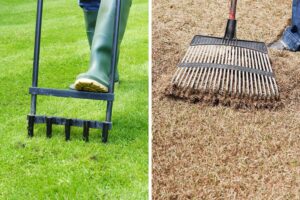
- Aeration: Core aeration once or twice a year reduces soil compaction and allows water, air, and nutrients to penetrate the root zone more effectively.
- Dethatching: If thatch (the layer of dead grass between the soil and the living grass) exceeds ½ inch, consider dethatching to improve water and nutrient penetration.
- Weed control: A healthy, well-fertilized lawn naturally resists weeds. Use targeted weed control methods as needed rather than blanket applications.
By coordinating these practices with your fertilization schedule, you create a synergistic effect that maximizes the health and appearance of your lawn.
Sustainable Lawn Fertilization Practices
As environmental awareness grows, many homeowners are seeking more sustainable approaches to lawn care. Here are some eco-friendly fertilization practices to consider:
1. Use compost as a natural fertilizer
Top-dressing your lawn with a thin layer (¼ inch) of quality compost provides slow-release nutrients and improves soil structure. Apply compost in early spring or fall using a spreader designed for compost, or by hand for smaller areas.
2. Leave grass clippings on the lawn
Grass clippings contain valuable nutrients, especially nitrogen. When left on the lawn, they break down and return these nutrients to the soil, potentially reducing your fertilizer needs by up to 25%. Just make sure to mow regularly so clippings aren’t too long.
3. Consider natural alternatives
Products like alfalfa meal, blood meal, or fish emulsion can provide targeted nutrients without synthetic chemicals. While these may require more frequent application, they build soil health over time.
4. Try lawn alternatives in difficult areas
Not every part of your yard needs to be traditional grass. Consider native groundcovers, rain gardens, or decorative mulch in areas where grass struggles, reducing your overall fertilizer requirements.
Conclusion: Cultivating a Lawn to Be Proud Of
A beautiful, healthy lawn doesn’t happen by accident. It’s the result of understanding your grass’s needs and providing the right care at the right time. By following the guidance in this article – testing your soil, choosing appropriate fertilizers, applying them correctly, and integrating fertilization with other lawn care practices – you’ll be well on your way to creating a lawn that’s not only gorgeous but also environmentally responsible.
Remember that lawn care is not a one-size-fits-all proposition. Regional differences in climate, soil, and grass types mean that the perfect fertilization program for your neighbor might not be ideal for your yard. Don’t be afraid to experiment (conservatively) and adjust your approach based on how your lawn responds.
With patience, attention, and the proper fertilization techniques, you’ll be enjoying a lush, green lawn that makes your home the envy of the neighborhood – and provides you with a beautiful outdoor space to enjoy with family and friends for years to come.